Treviso | The best town in Italy
Why this small Venetian city is perfect for travelers and expats alike

Hi, I’m Peter, and you’re reading Anywhere Italy. Our mission is to cover the 1,000 Italian towns most travelers skip, in person, one at a time. Come along for free, or pay to keep us on the road.
Words like underrated, hidden gem, and other clichés can’t really describe what Treviso is. I simply titled this as the best town. I did that despitve the fact that, for me, it is especially hard to “sell” this town to you, because I am emotionally attached to it. I am living in Turin now, but it was only bare chance and luck that we didn’t end up buying a property in Treviso. It was literally in the top 3 towns we picked to spend our entire life in. I’ll try to tell you our story and why Treviso is one of the best towns to visit in Italy as a traveler, and why it should be among your top destinations if you want to move here as an expat.
Unlike other town features, I will tell you two stories. One for the traveler and one for the expat.
The vineyards of Venice
We arrived in this town as travelers first. We lived in Rome at that time and regularly traveled back to Budapest, as we are Hungarians. There’s a direct flight, and there’s the uninterrupted highway option that takes about 13-15 hours of driving. We almost always opted for the drive because it gave us the option to stop at various towns for a night or two. Treviso started for us as one of these stops, as it was somewhat halfway between Rome and Budapest.
We stopped for a day first, and after the first evening stroll in the old town, we fell in love with it instantly. We simply couldn’t understand how on earth this town is not more popular. It was September and there were almost no tourists. So we returned many times. The second time, I spent my birthday there in April and we stayed for more than a week.
So, for a traveler, Treviso has a few very distinguishable things to offer. Let’s dive into each of them.
First of all, it’s extremely convenient. One of the most convenient cities to travel to. It’s small (only about 85K people inside the city), but it is right next to the highway and it also has an airport that serves as a budget option to Venice’s Marco Polo. It is also highly walkable, and the old town is small enough to cover in under a day. The surrounding areas are fully built out with proper roads and scenic drives through the hills of the Prosecco Road. Also, it is relatively unknown to anyone who’s traveling, which means it is almost never crowded.
I know this sounds like a logistics report, but trust me, some Italian towns are a nightmare to travel to. You have winding roads that can be challenging to drive, most countryside cities have no direct airport connections, and parking in most towns is borderline insanity. Add the “charming little town with vineyards and hills” into the mix and you end up with crowds buying fridge magnets, plus overpriced, low-quality Airbnbs.
Not in Treviso. We’ve stayed all across Italy in small hotels and Airbnbs. And we are not cheap on accommodation, but we had the worst experiences in most places. Never in Treviso. Everything is German-level maintained, properly cleaned, super convenient, and suspiciously comfortable. We usually stayed just outside the old town walls, so it took us about 15 minutes to walk to the center. Perfect, because walking is good for you, the route is scenic, and you can still park your car next to your place.

Everything I write is free for its first four weeks. After that, only paid readers can access all the guides and dispatches, as well as the books I write, like these three, and the ones still come.
To gain access, get the annual plan and pay 10% less, forever.
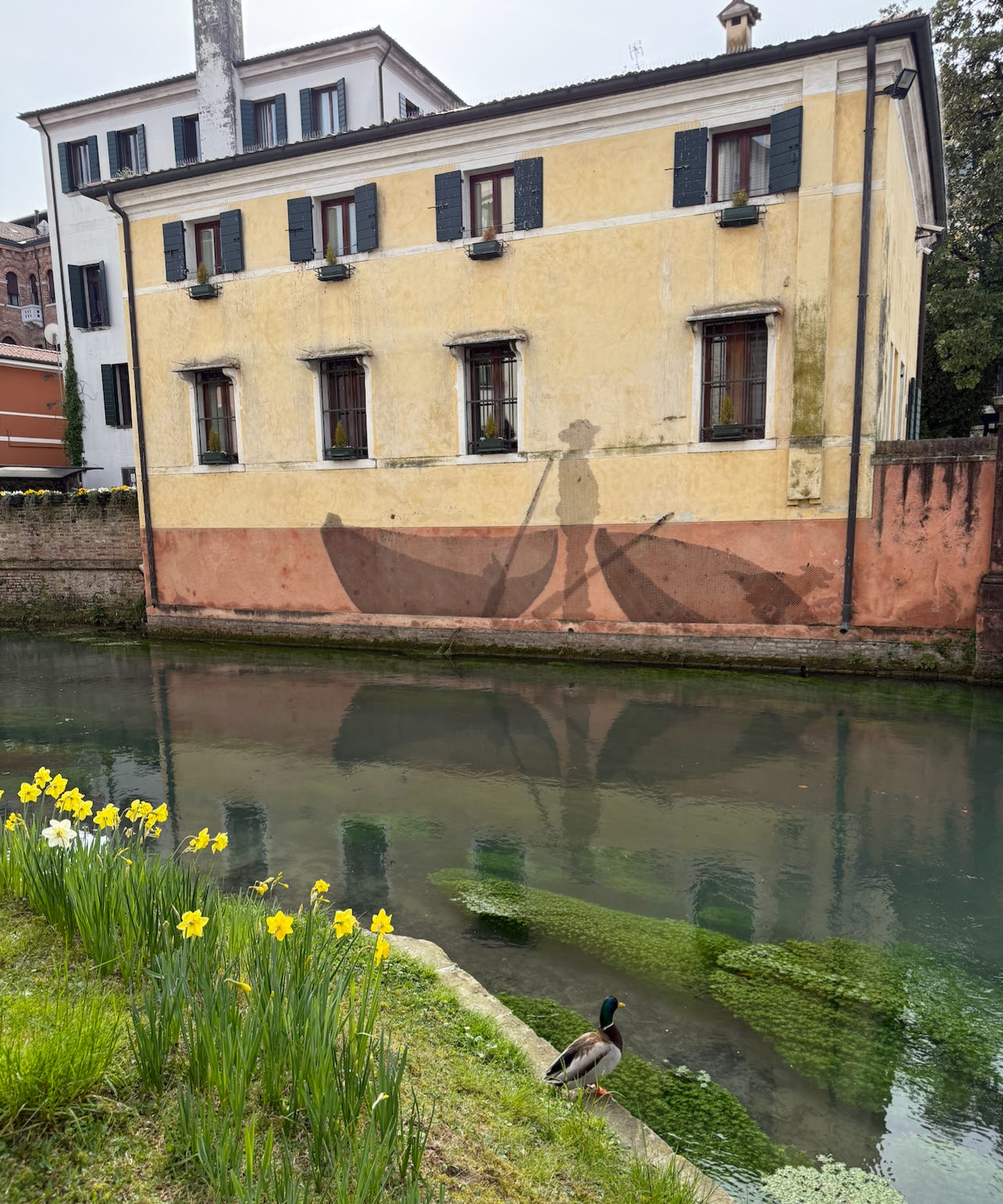
Second, the city’s old town is one of the best-kept places in Italy. It is fully walled off from the rest of the city, and there is a main ring road around it. With permits you can drive into some parts of it, but don’t bother. Walking is the best. It’s mostly walk-only anyway, and you want to walk. The old town is medieval, but in the best way possible: everything is maintained, renovated, and it is what you would call neat and tidy. Plus, it has canals.
On our first night we took a very long walk in the city center, inside the walls. The canals create small alleys and narrow streets, but the town doesn’t feel cramped, which is kind of unique on its own. Many smaller piazzas break up the alleys, and all of them have cafes, bars and trattorias. It’s also flat, so it’s easy to walk through. And the best thing, which others might not care about but is important for me: the air feels super fresh. The river canals seem to cleanse the air, and it feels as if you are walking in an alpine town.
Now, before you scream, oh, this is an alternative to Venice with canals, no, it’s not. For two reasons. If there is an “alternative”, the closest to it is Chioggia.
Read my article on Chioggia here:

Plus, Treviso’s canals are freshwater ones: a local river rises from springs just a few kilometers north of the town, splits into three branches at the walls, and what you see running through the streets is cold, clear spring water. That’s why Treviso has ducks and freshwater birds around the canals, not seagulls. Also, the city is not built on a lagoon with small islands like Venice. The freshwater canals simply run through the existing old town. You have less prominent bridges, but everywhere you look, you will see ducks and a small river flowing through canals and small ponds. It adds to the vibe, but it is not the main attraction.
So what’s the main attraction? Well, it’s the setting of the town, where it sits. Remember the convenience? I would argue that Treviso is the town that has the best setting, like ever, in Italy.
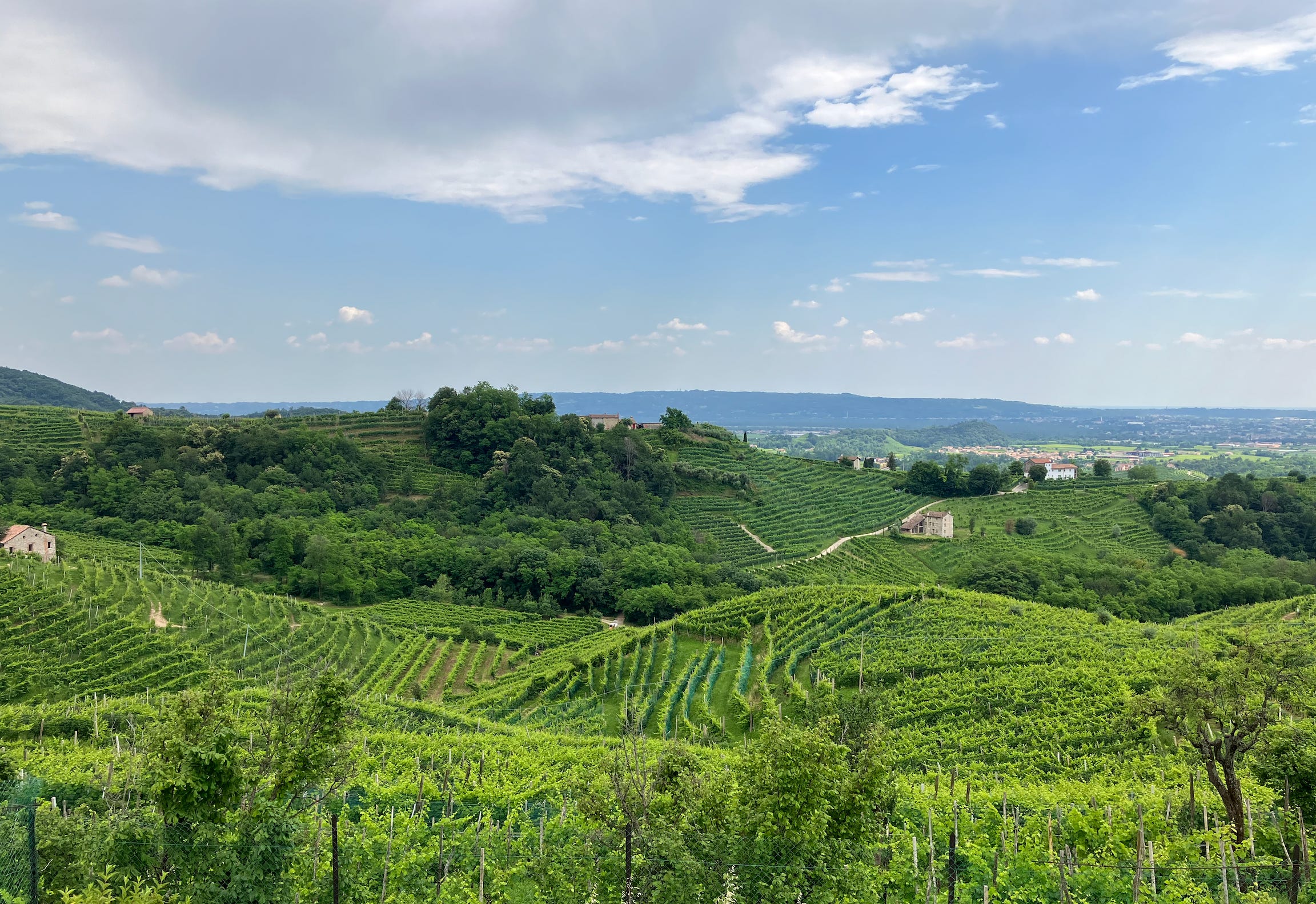
Look at the map. Venice is 30 minutes by train, and there are trains all day. Within 30 minutes you are in the center of Venice. You don’t fancy the most convenient trip ever to Venice? Fine. One of the best wine regions of Northern Italy is also a 30-minute drive away, the Prosecco Road. Yes, that Prosecco. It’s from here. The route is scenic, the wine is awesome, and the vineyards are also gastronomy and hospitality centers. Want a bigger city that is not Venice, because you need something extra that a smaller town like Treviso doesn’t provide? Padua is under an hour’s drive, Trieste under two. Want to escape to the high mountains? Why not, the Dolomites start about an hour north.
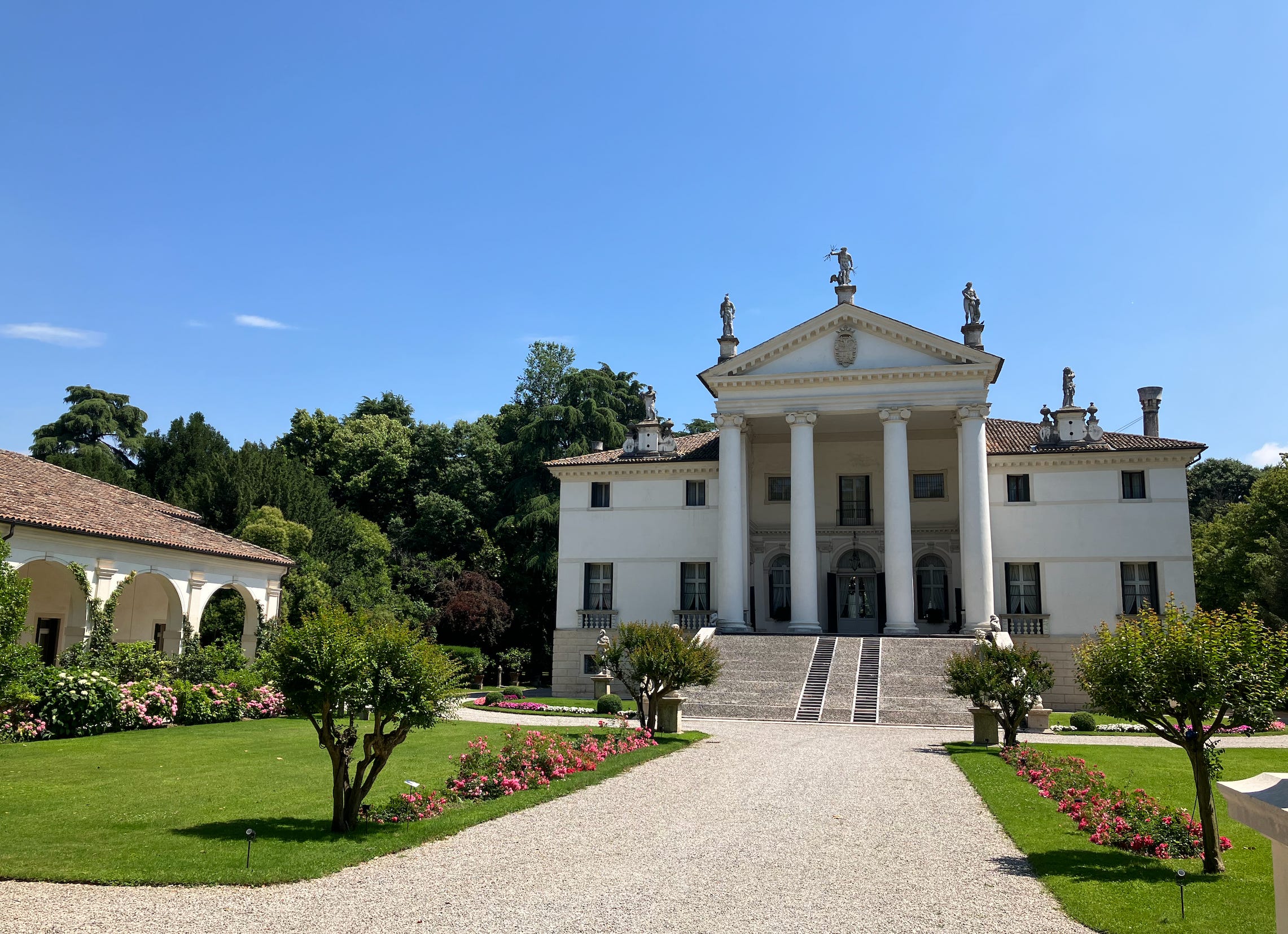
On the next days we visited the Prosecco Road. We ended up at Villa Sandi by bare chance, as it was right next to the road we were driving on. Most of the area is so far from the crowds that we didn’t even need to book a tour, we just got one. The hosts guided us through a long tour around the villa and the vineyard, and we tasted Prosecco variations. It turned out the entire complex is owned by the Moretti Polegato family, the same family behind Geox, the shoe and clothing brand. We even had our dinner in their restaurant nearby. And I know I’ve said this many times about convenience, but it was just so easy to drive back to our place, as the entire wine region is super close to Treviso itself.
You can kill even two weeks in this city without getting bored. The old town is super relaxed as there are no tourist crowds, and the town itself is not that big anyway. The Prosecco Road with its vineyards is also not crowded, since everyone is flowing either to the Chianti region or to Barolo and the other Northern regions for gastronomy. Everything stays local and very Italian. And you are minutes away from Venice without the need to sleep there, because the trip is super chill to do even on a daily basis (many locals work in Venice and do this train ride every day).
The restaurant scene is amazing in the town. I highly recommend Pierre, it’s just next to the old town’s walls. Make sure you don’t skip the fish market in the center of the town, which is on a small island surrounded by canals. The places that sell food around the market are the best.
Also, since you are there, try the tiramisu. Treviso claims that this cake originated in a local restaurant, Le Beccherie, and Italians (especially people from Friuli) are still arguing about it. Nevertheless, the town serves one of the best versions of tiramisu, if not the best.
Also, a few minutes’ walk from the fish market, there’s the Fontana delle Tette, a fountain with a woman’s figure, and the local tradition is that it ran white wine from one of the breasts and red from the other. Now it runs only water, sadly.
The best small city to live in Italy
Yeah, this is a bold claim, but I stand by it. If only provincial capitals can play, Treviso is probably the best town to live in, closely followed by Lucca, Verona, and Udine. As I mentioned, we almost bought an apartment here, and yes, we did our research on the town before putting it on our top destinations to live in.
I wrote an entire series on where to live in Italy, and Treviso was one of my arguments. I compared it to Pisa and clearly crowned Treviso in that “battle.” I’ll be brief here with my argument. Not sure about you, but if I pick a place to live in almost forever, I want a unique combination of comfort, inspiration, and convenience. Treviso has all three.
Read the article on where to live:

I’ve told you how convenient the city is. It is close to Venice, Padua, Trieste, the vineyards, and the Alps, it’s next to the highway, and it also has an international airport. It’s easy to drive and travel inside the city, and it is not crowded with tourists either. Prices are local, and so are the people. These things help you live here.
I know this all sounds dry, but think about it. If you visit a town and spend a month there, you will probably encounter some issues. Too steep a walk to the center, or the infrastructure is just not there yet, or you see shady people around the corners, or you can’t buy whatever you want within 30 minutes of reach, or something else. Little annoyances that you turn a blind eye to when you are just visiting. Give it a year or two, and those little annoyances turn into major shitshows that you deal with constantly, all the time, every day, and within a decade, you are happy to sell your home and move to another town that doesn’t have these issues.
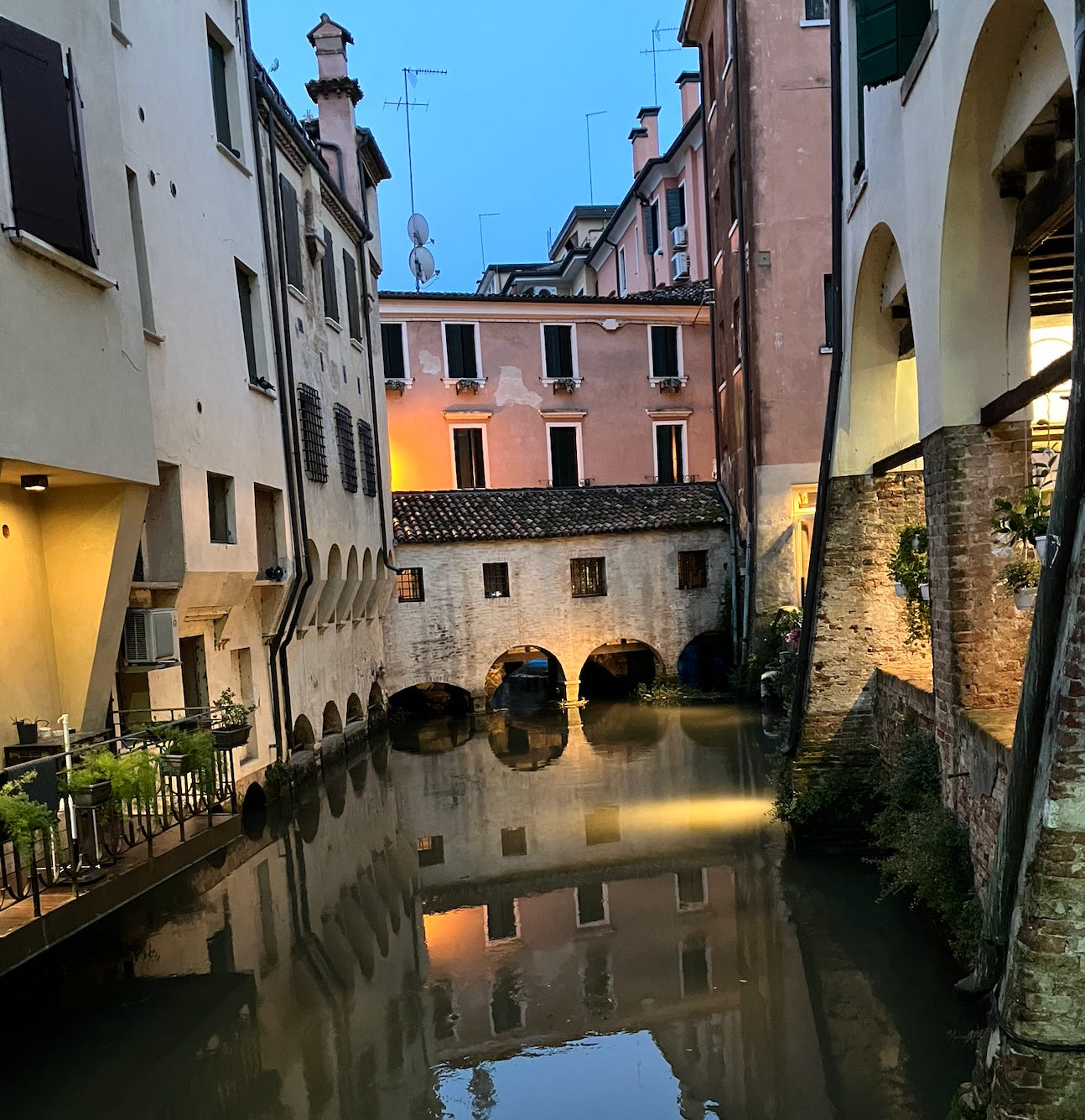
I’ve also told you that the city is inspiring. The vineyards, the proximity to Venice, the old town with its canals and markets, everything is just nice to look at, and whenever you want to do anything, you can get inspired. Yeah, after a few years, you will probably know every canal by its turns, and you will probably have named most of the ducks as well. But the old town will always be there for you to take an evening stroll, and there is an abundance of restaurant choices as well. And that’s just the center. Give it 20, 30, 40 minutes, and you are in a different world. If you are really bored, the airport is so insanely convenient that it takes only minutes to board a flight, as it is small, and you can reach most major European cities within hours.
And there is comfort. This is the biggest win here, I should have started with this. The city is rich. Very rich. It is one of the only large towns in this region that is growing in population, which is rare in Italy. Its province tops the life expectancy charts in Italy, which is already insanely high anyway (85 years), and it sits at the very bottom of the crime lists, so it is one of the safest places in Italy.
And frankly, take a stroll in the old town. Or just go outside the center and visit a residential area. I mean, I’m not saying it is like Switzerland or Bavaria, but you can simply see how well maintained not just the city is, but its people too. Locals dress well, even by the already high Italian standards. The restaurants are upscale, the bars are more like wine bars than pubs, and the number of shops, especially in fashion, is abundant. Don’t forget that this is a small town, only about 85K people, yet it behaves as if it has a million souls to spend money on stuff and experiences.
One residential area I can recommend is the super local Fiera, east of the city walls. You should stay close to the Sile river. The old residential area is there, and the walk along the river is worth taking. Locals usually stroll, run or do activities there, and the view of the river is amazing. The road you need is Via Alzaia. Another amazing area is the residential part of Santa Maria del Rovere. It is mostly built out with old villas, but all of them are fully renovated, magnificent, and it is worth just walking around the streets that spiral out from the main boulevard (Viale Vittorio Veneto).
If you do some research, as I did, it is easy to get why. The town is home to many brands that you might have heard of outside of Italy. United Colors of Benetton, Geox, De’Longhi, Diadora, and Lotto all have headquarters either inside the city itself or in its province. The province is also Italy’s number one exporter of furniture, it has a long history in ceramics and porcelain, and don’t forget the wine production, which is huge around the area.
The large number of businesses based in Treviso, compared to the relatively small size and population of the town, means that the city is doing really, and I mean really, well. It is rare to see abandoned or less-renovated buildings, and the city has all the amenities that a modern town can offer its citizens. Also, since everyone has a job to do, crime is really low.
I would say the only thing that is missing here is a proper university, which would give the town a much younger vibe. It has some campuses, but only small ones, as the main ones are based in Venice or Padua. Because of this absence, the town is more suited, I think, to working professionals or older adults who want a calm, relaxed, convenient city in Italy that is absolutely amazing to live in, and close to everything most people are dreaming about.
To me, Treviso is the place to go when I want the Venice experience. Chioggia is amazing but much more challenging to live in. Treviso, for me at least, is the town where you go to just relax. A slow week visiting vineyards, Venice, and strolling along the canals of the old town.

Wonderful for wine-food-art lovers!!!👏