


Hi, I’m Peter, and you’re reading Anywhere Italy. Our mission is to cover the 1,000 Italian towns most travelers skip, in person, one at a time. Come along for free, or pay to keep us on the road.
The man at the next table was a giant dude. Giant beard, long gray hair, and a leather jacket he did not take off for dinner. You know this type, the one who rides a Harley everyday and their beard smell like BBQ. It’s a universal type, but the Italian version can hold a wine glass like your sommelier would in the most fanciest restaurant. Across from him sat a small, delicate woman, fine-boned and slim, his complete opposite in every way. Little girl and papa bear. Classic. Between them sat a giant platter of seafood. Like, almost like a feast of shellfish, crabs, and whatevers from the sea. And I watched them eating an enormous bowl of pasta before that.
We were in Bacaro La Baia dei Porci, on the main street of Chioggia, my wife and I. It was our first stay of many in this town. A bacaro is the Venetian version of a pub, a small, loud wine bar where you drink and eat small plates. Sort of like a sailor’s version of working men’s pub. It’s not our genius travel skills that led us here, it was Gennaro who told about it. Who’s Gennaro? Well, he is a half-drunk sailor, fisherman, who stopped the trade a decade ago but he still smells fishy. He was our host on the Airbnb. As any fishermen would, he loved his beer, he loved to eat, and he had a belly.
It was November, every weather report said that we have picked the worst possible weekend to visit this place because of heavy rain, which, somewhat like an Englishman, I complained about it to Gennaro. He said to me with 500% confidense: “No panic! No rain domani!” Guess it’s like a 6th sense of the fishermen, because yeah, we only had a fog, but no rain. Anyway, he told about this bar where we ended up with the Giant and his puppy.
The bar was small, so we had booked a table. Most places in Chioggia are small, and even with very few tourists around, the locals fill them. Well, in the Venetian lagoon, or in most seaside towns, most places are small anyway. Not much room to spare. We ordered the plainest thing there is, the big fucking fish platter, a sharing plate with a bit of everything from the sea, and a bottle of sparkling wine. Then I watched the giant and his date work through their feast. As we did.
After about half an hour (and at about the second bottle of Prosecco) he leaned over and asked what language we were speaking. My wife and I speak Hungarian to each other. It’s amazing because we can talk about anything and I mean ANYTHING, and literally no one understands, because our language is so f—ed up that it resembles no other languages. To Italian ears it sounds like singing some elvish hobbit-like language, straight out from the Lord of the Rings. Within an hour we were really, really good friends. He was a blacksmith from Rovigo who made knives and cutlery by hand, and he invited us to his town. His name was a weird long one, which I couldn’t get, so he simply said “just call me Bubu.” OK. It also turned out that he was on a first date. I still don’t know why he spent an hour of it talking to two Hungarians instead of to the woman across the table, but hey, not my time.
That is Chioggia. A town with almost no tourism, where everyone is a fisherman or a worker or a farmer, and everyone is curious about everyone else. You do not sit in a place like this and simply watch the world go by. The world leans over and asks what language you are speaking.
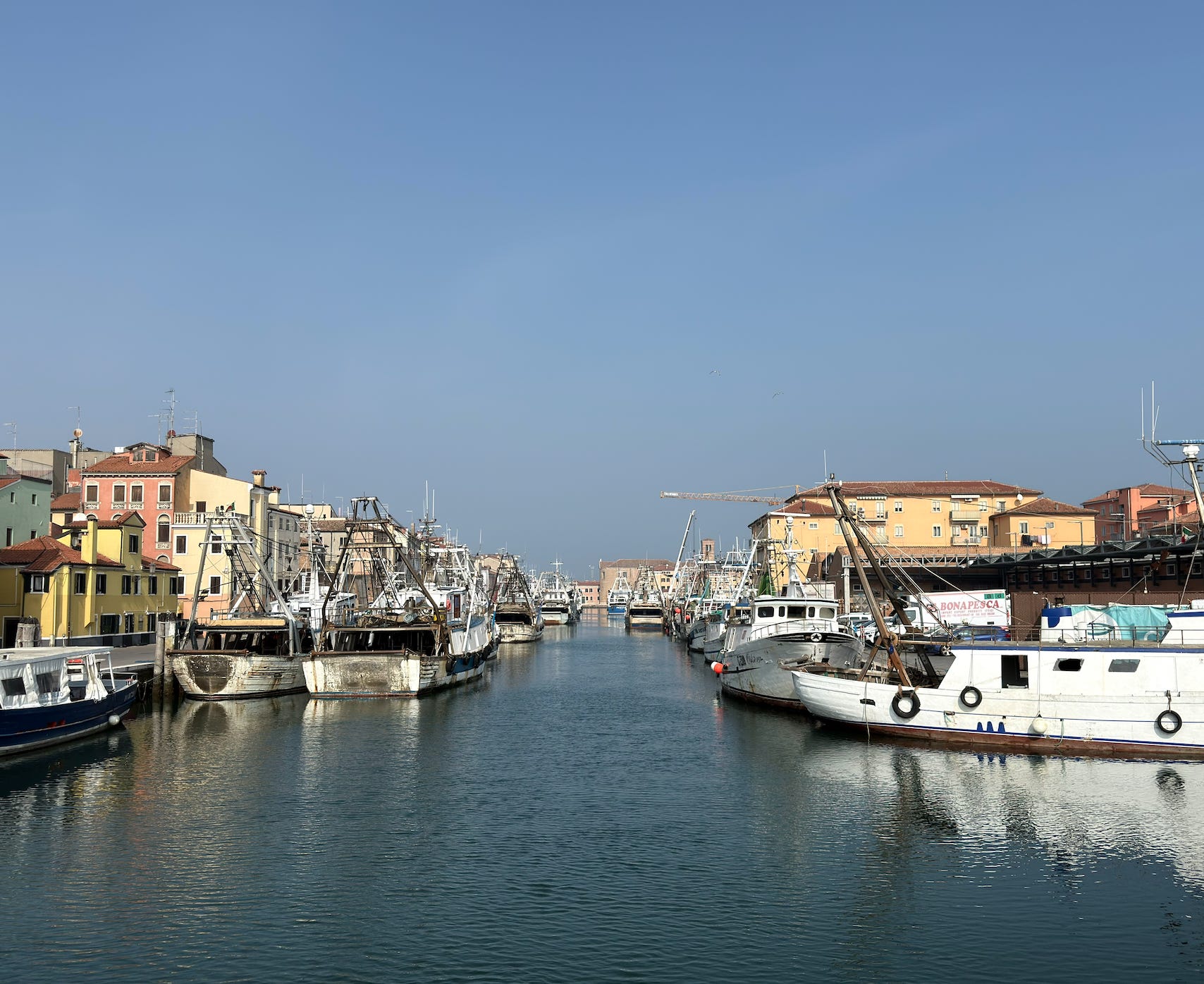
If you have been to Venice, you know what Venice is about. Merchants, artisans, shipping, money. It is grandiose, far more historic, and you can feel the empire in it. Venice is not about fishing, or farming, or food. Maybe a little, on the smaller islands nobody visits, but not in Venice itself.

Everything I write is free for its first four weeks. After that, only paid readers can access all the guides and dispatches, as well as the books I write, like these three, and the ones still come.
To gain access, get the annual plan and pay 10% less, forever.
Chioggia is the complete opposite, and you see it within minutes. There are two Chioggias: the old town, a cluster of small islands with canals and bridges, and the new town on the sandy beach to the east, called Sottomarina. The whole of it is centered on one giant fish market. Everywhere you walk there are fishermen, fishing boats and fishing nets. This is the town that supplied the bread to the Venetian markets, and of course, the fish or whatever the sea gave. I don’t even know the various shellfish names in English, or even in Hungarian or Italian. But I’m sure Gennaro knows them all.
Every travel article about Chioggia mentions, casually, that it is a fishing town south of Venice. None of them explains what that means. It means an auction that starts at four in the morning, for locals only: restaurant owners, businesses, the people who resell the catch. Retail buyers like you and me can only buy once the auction is over, around six or seven. By the time most tourists find the market at eight or nine, everything really fresh is gone, and the stalls go back to the usual tourist-market business. The auction ends up in the restaurants, though, and that is where you taste it.
I have a standing rule, and it might sound controversial: I never eat seafood more than an hour’s drive from the sea. Shellfish and the rest of it spoil, get frozen, stop being fresh. Fish is more forgiving, although it is better fresh too, ideally raw. I lived by the sea for three years, near Viareggio, another fishing town, so I know what fresh means, and there is nothing closer to the source than a fishing town where the catch comes in at dawn and is on the lunch tables by noon.
The food here is, I would argue, better than in Venice. There is nothing fancy about the restaurants. No polish, nothing posh, none of the luxury. Straightforward fishing-town food, generous and insanely fresh, at prices with no Venetian markup.
Venice knows exactly what Chioggia is, and it has a joke about it. The winged lion of St Mark is everywhere in Venice, and Venetian bridges are magnificent things, built for a merchant class that wanted to be seen. Chioggia’s bridges are plain and simple, with very little detail. There are small lions on the Vigo bridge, and right next to it, on a column in Piazzetta Vigo, stands Chioggia’s own lion of St Mark. It is so small that the Venetians named it the cat of Chioggia. Not a lion, fearsome and dominating, but a little kitty. That one nickname tells you everything about how Venice looks at Chioggia, with the condescension of a capital for its fishing village: why take them seriously, they don’t even have a proper lion. They have a cat.
It’s not an alternative to Venice
The alternative to Venice. The city without the Venetian crowds. No tickets required. Not a theme park. The hidden gem south of Venice. This is what the foreign press calls Chioggia, on list after list of “off the beaten path” places.
I know this angle works. My own site has articles built on it, “the alternative to [famous town],” and they bring in a certain kind of reader: people who want a one-sentence answer, get it, and leave, never to be seen again. That is not only how they read. It is how they travel.
I am not going to give you the one-sentence answer, for three reasons.
First, I love this place. When we were choosing where to buy a home in Italy, Chioggia was on our shortlist of five. We ended up in Turin, but it could just as easily have been Chioggia. Every time we visited another town on that list, Treviso, which will get its own piece, we went to Chioggia too. Every time we lived in Verona, and we lived there for months at a time, we went back. I have lost count, but it was at least three or four separate stays.
Second, there is no alternative to Venice. There is no alternative to London, New York or Paris either, and least of all to Venice. Have you been to Venice? How could anything be its alternative?
Third, almost everyone who writes about Chioggia sees the canals and says, oh, it’s like Venice. That is like seeing a skyscraper and shouting, oh, it’s like New York.
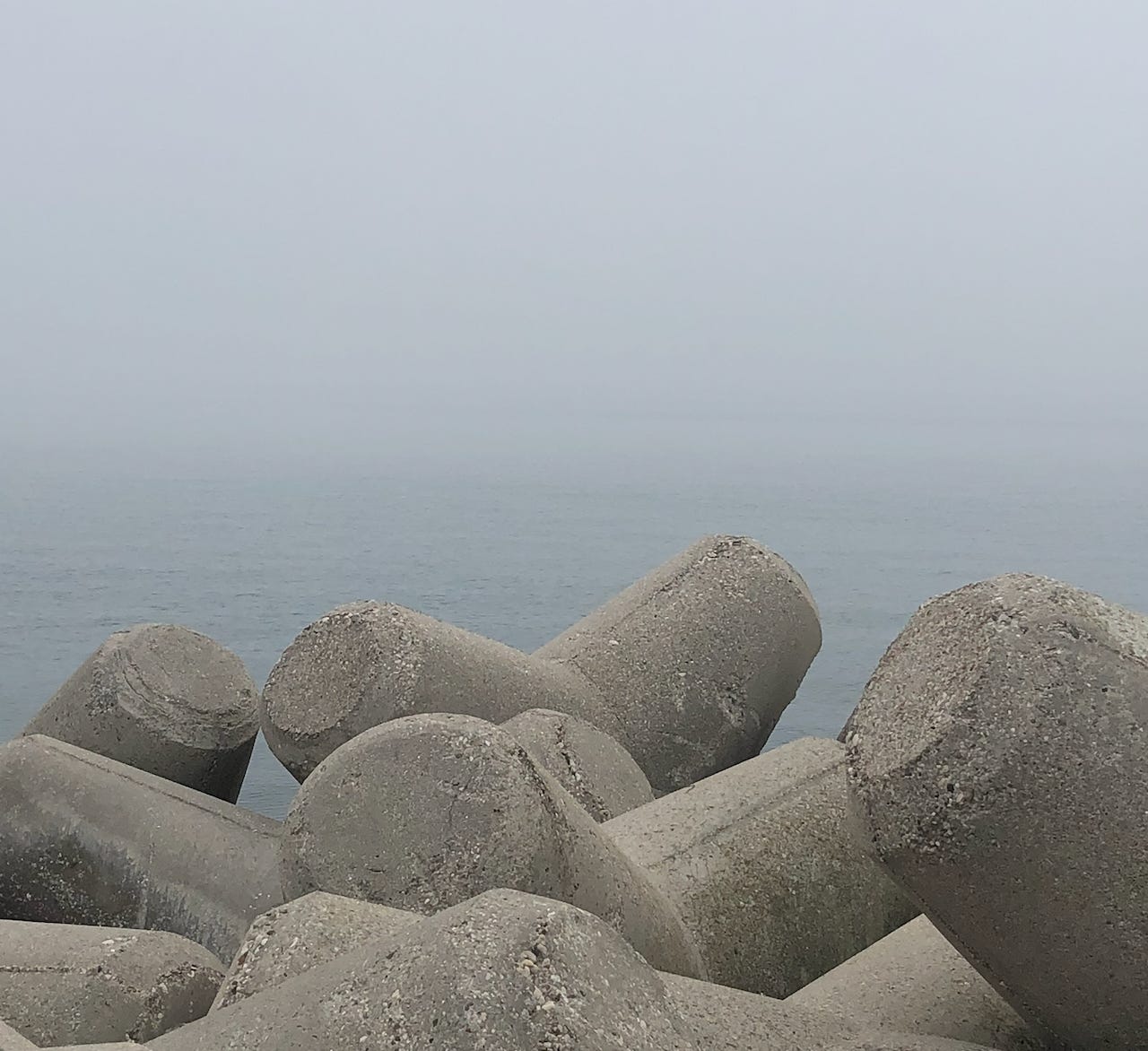
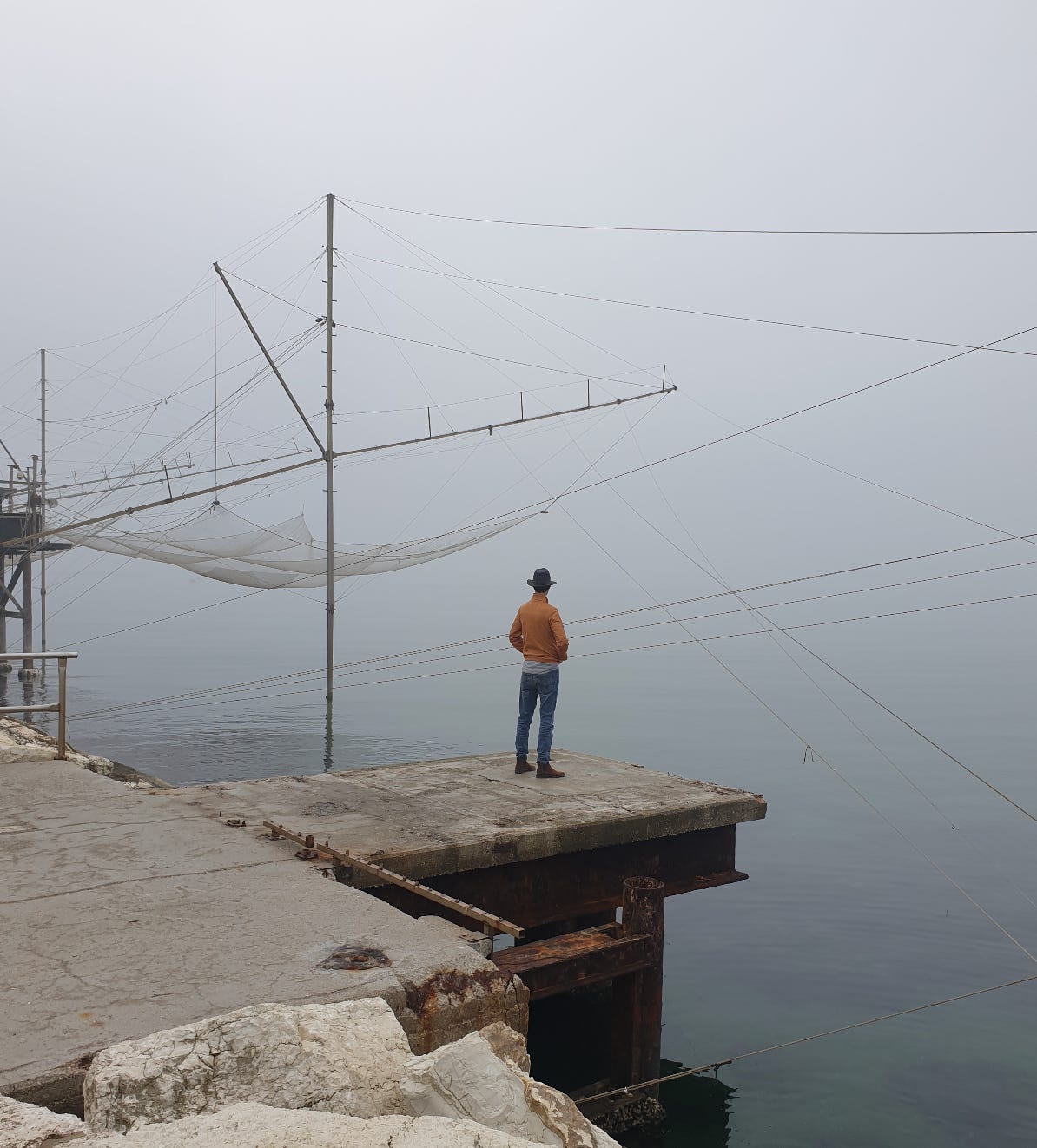
The first time we came, it was almost by accident. We were living in Verona for a month, it was November, and Venice was an easy train ride away. We had both been to Venice many, many times, and on a foggy, gloomy day like that one there was no point going back. So we went past it, down to the bottom of the lagoon, to Chioggia. We found the Hotel Grande Italia, a grand old building on Piazzetta Vigo, right on the lagoon at the end of the main street, completely empty and at a good rate, and we booked it. We wanted a few days by the sea, in a fishing town, with real seafood. That fog is in the photos in this piece. It was the only time. Every visit since, Chioggia has been sunny and windy.
What nobody writes about is the other Chioggia. East of the old town’s islands is Sottomarina, a long, uninterrupted sandy beach, and in summer it belongs almost entirely to Italians. Some of them own a small flat there. Some book a hotel. Most of them, you can tell, come back every year.
In Venice, nearly every building you see is more than a hundred years old. In Sottomarina, the buildings are from the thirties, the forties, the sixties, seventies and eighties, and some are new. It is a living, working, present-day town wrapped around an old one, and the old one, the islands on the west side, is as old as Venice, only on a different scale. Hardly anyone mentions that you can stay here in a modern hotel or a modern apartment and have a perfectly normal beach holiday, the kind Italians take in Rimini, about an hour by boat from Venice. Everyone writes about the little canals and the fish market. That is just the surface of the picture.
The perfect day
After that first November we kept coming back, and our days there took on a shape I still think is the best way to spend one.
We always slept in the old town. Sometimes at the Grande Italia, sometimes in small apartments, once in Gennaro’s inherited house. Sottomarina has the modern hotels, and the walk between the two takes twenty or thirty minutes, so it hardly matters which. What matters is being inside the town when it wakes up.
We never got up early enough for the auction. There is no point trying, because nobody beats the people who start at four. But we always walked to the market anyway. It is in the old town and you cannot miss it. You just follow the smell. Even after the real buying is done, it is worth standing there for a while and taking in the noise.
The port is a short walk from the market, and from the port the fishermen run boat trips around the lagoon. That is a new thing. For centuries the boats left Chioggia for Venice to deliver fish. Now the same men, who do their real work at night and in the early morning, take visitors out in between. We saw most of the Venetian lagoon and most of its islands this way, from Gennaro’s rundown fishing boat. It is nothing like the water taxis of Venice, which are upscale and romantic and not how anyone who lives on the lagoon travels. The fishermen go where they like, especially with people who speak a little Italian. Gennaro took us to a stretch of the Lido, the long beach where Venice holds its film festival, that was almost completely empty and could only be reached by boat. A trip like that takes a couple of hours, or longer. We never hurried it.
Then we ate, and we ate a lot. Most restaurants in Chioggia serve the local catch simply, cooked or raw, without fuss. A few have their particular techniques, but the idea everywhere is the same: fresh, generous, and as much as you can manage. Our favorite, along with the bacaro, was Osteria Penzo, on Calle Larga Bersaglio, a side street off the main street that leads down to the Grande Italia.
I have a thing for port towns. I love Livorno, I love Genoa, and Chioggia belongs to the same family, only smaller. It is honest and it works, and it is full of people making a living and making something. It is almost a breadbasket for Venice. It is not an alternative to it, because nothing is. Chioggia is just Chioggia.
Come for the fish, for the fishermen, for the man at the next table who wants to know what language you are speaking. Just don’t come looking for an alternative to Venice.

Loved this article, thanks! Chioggia, along with Venezia, is also the setting for "Odio il Natale," a Netflix romcom that we're watching in my online Italian class, with numerous on-location scenes.