
Hi, I’m Peter, and you’re reading Anywhere Italy. Our mission is to cover the 1,000 Italian towns most travelers skip, in person, one at a time. Come along for free, or pay to keep us on the road.
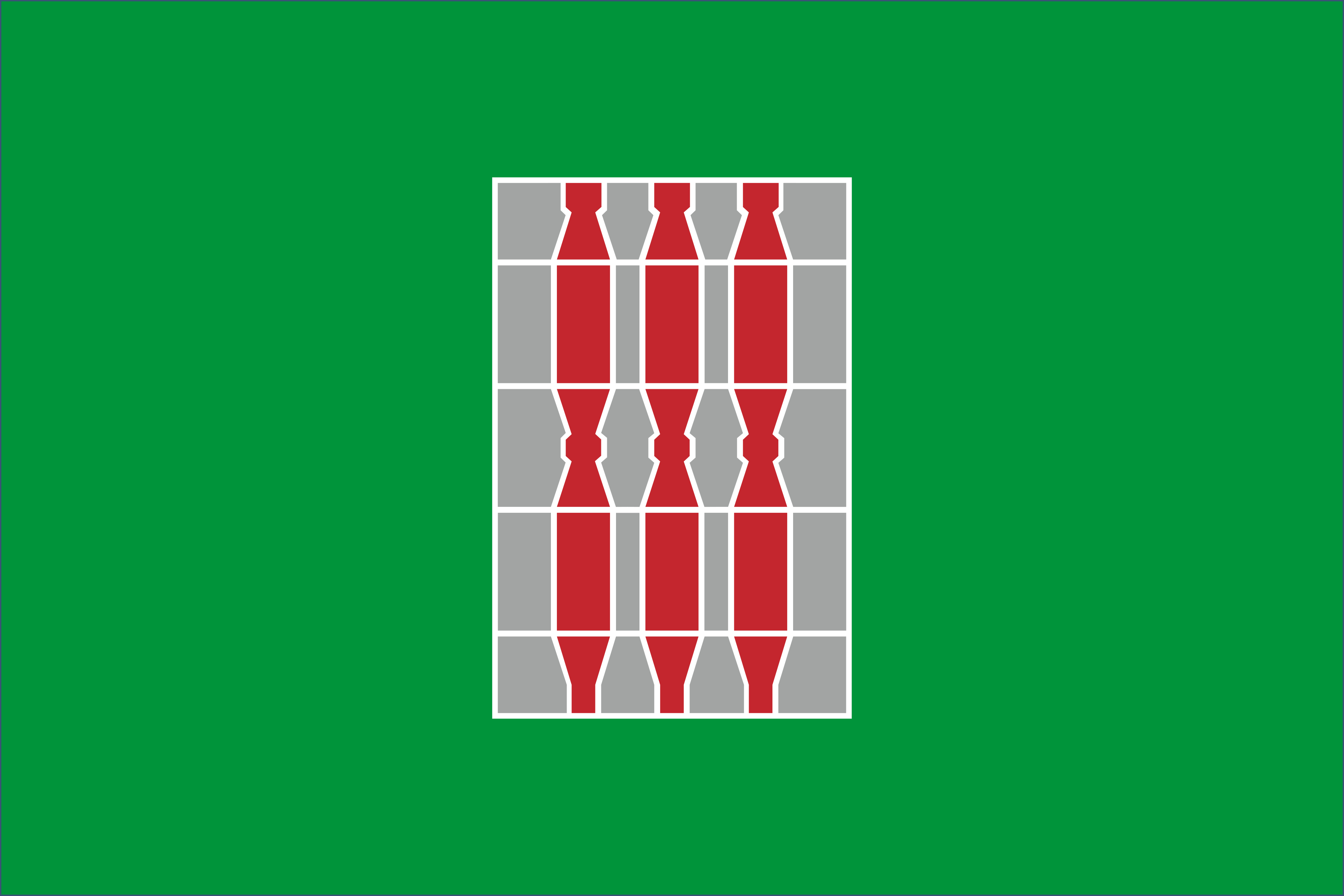
A few days ago, I wrote about the Umbrian Circle. It’s a roadtrip that goes like a circle under the region’s capital, Perugia. I also wrote about Perugia itself here. Some of you who know a bit more about Umbria might have wondered, ok, but where’s Gubbio on the list? Maybe some have even asked why the flag of Umbria looks a bit odd? What are those three red thingies?
And if you are a Hungarian, you’re definitely missing Gubbio from the list of Umbrian towns I cover here. So, all three questions will be answered.
Off the map
First off, the most important reason it’s worth a visit is because it is off the map. I know it sounds counterintuitive, but Anywhere Italy, and I myself, are all about hidden towns in Italy that are untouched by mass tourism. Gubbio is literally the prime example of this.
Why? Look at where it is. I had to make a detour from Perugia to visit. It took almost an hour of driving. Yeah, you can do it from Florence, but it takes about 2.5 hours. It faces the Marche more than it faces Tuscany or even Umbria. It is also a bit off any roadtrip (I didn’t include it in my Umbrian Circle). It’s a bit closer to Arezzo, which I wrote about, but let’s be honest, Arezzo is also off most mass tourist routes. I agree, it is not as isolated as many towns in Abruzzo or in the South. But the average traveler needs a reason to take the detour.
Which is exactly why I love it.
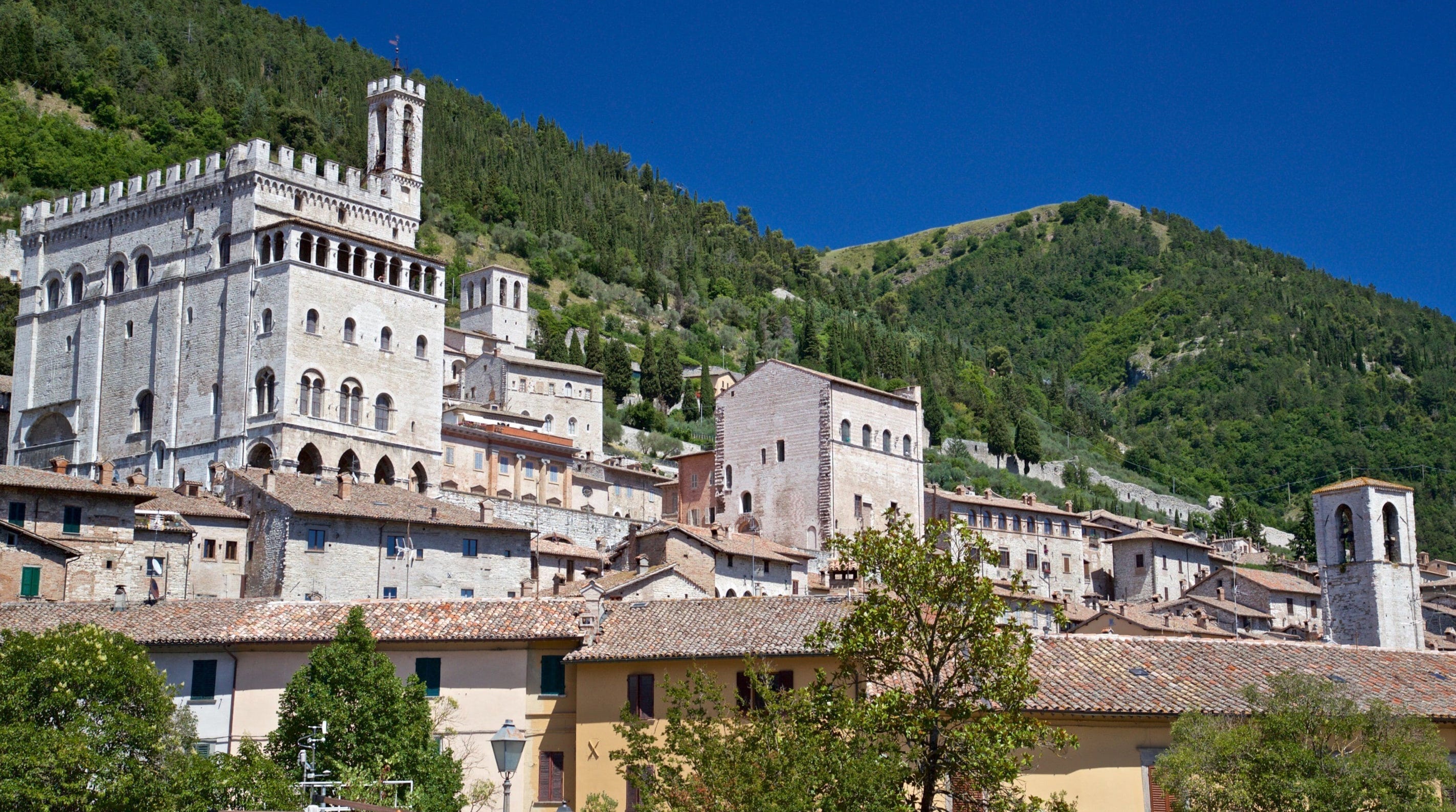
If you know nothing about this town, the closest analogy I could give is that it is like Assisi, but without the pilgrimage Disneyland. As I wrote it in my article, Assisi is flooded by religious pilgrims, and frankly, it’s more like a theme park than a medieval town. Yes, it is beautiful, but still… Gubbio offers the same vibe but without the crowds.
And because it is off most maps, it keeps its traditions to itself. It’s not like Siena or other famous towns, where the local festivals are slightly performative for visitors nowadays. Gubbio’s local festival, the most famous one in Umbria, the Festa dei Ceri, is for the locals, no one else.

Everything I write is free for its first four weeks. After that, only paid readers can access all the guides and dispatches, as well as the books I write, like these three, and the ones still come.
To gain access, get the annual plan and pay 10% less, forever.
The third tower
Ok, so I’ll explain it plainly and it might make sense. There is this Ceri Festival. Cero means large candle, the ones you see in churches. At the festival, they look like three large wooden towers, with a statue of a saint sitting on top of each tower.
There are three candles/towers. One for each saint: Saint George, Saint Anthony, and Saint Ubaldo. Ubaldo Baldassini was Gubbio’s bishop in the 1100s, and he has been the patron saint of the town ever since. So guess who’s winning all the races, all the time? Yep, Ubaldo.
Oh yeah, sorry, forgot to mention that this is a race. The three towers/candles are carried by local men up Monte Ingino, to the basilica named after Ubaldo at the top of the mountain. The entire town of Gubbio is built in layers below the mountain.
The day starts in front of the town hall (Palazzo dei Consoli), where the three towers are raised upright at noon. In the evening, 3 groups of men carry the 3 towers/candles up, starting lower in town. The one with the Ubaldo statue on top goes first and gets a head start. No one overtakes it, which would be impossible anyway, because the town’s small and narrow medieval streets don’t allow it. The ceri stay up in the basilica, and after dark, the three saint statues come back down the mountain in a torch-lit procession.
There are some explanations of why this race, why running uphill, why the three ceri, but honestly, it’s just an old tradition that has been kept for hundreds of years and is still practiced today. Carrying the ceri is a family tradition, traditionally passed from father to son.
This is how it looks, the start:
And this is an amazing video of the entire race and the town itself:
The race is so popular in Umbria that it is on the Umbrian flag: the three ceri are those three red “thingies” you see on it. It’s hard for me to know how popular this is outside of Umbria, but my guess is not much. Siena with its Palio and other towns nearby have much more popular events that are well-known to everyone. But this is exactly why this event is amazing. You can go there as a spectator, but it’s not a performance for you. It is for the locals.
Journey by moonlight
Again, it is kind of hard to know which Hungarian novel is the most popular among English speakers. One of our writers, László Krasznahorkai, won the Nobel Prize last year. Another one, Imre Kertész, won in 2002. George Faludy published a lot in English, and his memoir (My Happy Days in Hell) is also well known. One writer, Antal Szerb, and his Journey by Moonlight serve as a connection to Gubbio.
We Hungarians know this novel, most of us by heart, and its entire theme, the protagonist’s search and obsession with death through a beautiful journey in the Umbrian countryside, and also Antal Szerb’s personal story behind it, are, and I hope I won’t offend anyone, very Hungarian.
He traveled to Italy in 1936, suspecting it was his last time, which turned out to be correct as the war broke out. His friends tried to save him with forged documents (he was of Jewish descent), but he explicitly refused, as he wanted to share the fate of his generation. He died in the Balf forced labour camp on 27 January 1945, the same day Auschwitz was liberated. His work is available in English, and he is one of the most-read and most popular novelists in Hungary. His travel diary documenting his Italian journey is called The Third Tower, and I picked the title of this article as a homage.
In Journey by Moonlight, the hero, a wealthy Hungarian, pretty much runs away from adult life on his honeymoon in Italy to search for his childhood memories and friends, trying to find an escape in death, but ultimately he can’t find it, so he accepts his future. The running-away part is a beautiful roadtrip to Rome, through the Umbrian countryside. Gubbio is one of the main scenes where the story happens. It was a foundational book in my 20s and early 30s, but it’s worth re-reading as we get older.
Hungarians today visit Gubbio just because of the Ulpius family (characters from the novel). It’s the ultimate roadtrip to have. A friend of mine, who’s also a writer, Gergely Péterfy, who lives in Todi, organises Ulpius-themed trips, Gubbio is one of his prime stop.
And the dinos
I was walking the medieval streets, and almost no one was there. Everything reminded me of Assisi, or even some northern Friulian ex-Lombard medieval towns, but with a total absence of tourists. And then… dinos. Out of freakin’ nowhere. There is a museum with dinos.
Ok, so it turns out that just outside the town walls, there is a gorge, the Bottaccione. In the 1970s, geologists found unusual amounts of iridium in a thin layer of clay in that gorge. A theory came alive and got published in 1980: a huge asteroid (carrying the iridium) probably caused the dinosaurs to disappear (as the layer was dated to that time). In 1991, the crater was found in Mexico. The theory was confirmed. But it all started in Gubbio.
The town doesn’t have actual dinos, so the museum holds only made-up ones, but it is here that scientists found out about the extinction event that made the poor dinos disappear. Fun fact: the pinkish-white medieval buildings are made of the same limestone in which the discovery was made.
Oh, and do you remember the etruscans? I wrote about them here. Another ancient civilization was the Umbrian people, who lived here in the mountains and forests of Umbria. They were completely swallowed up by Rome later, just like the Etruscans, and their language disappeared. Until some dudes in the 15th century found seven bronze tablets with a weird language written on them. That’s the Umbrian language, and almost all we have left of it. They are on display in Gubbio.
I know Umbria has Spoleto and Perugia as its old and new capitals. I know the region has Assisi and many other medieval towns that are famous for a reason. But Gubbio feels like the heart of the region, the soul of the people who live here.
And, to be honest, it represents the people I met in Umbria. Gubbio completely lacks any performative show. It doesn’t care what you think about it, and doesn’t care if you like it or not. It doesn’t even matter if you know about it. But it is there, a few hours from Rimini, Florence, and Bologna, hidden in the mountains. I do understand why their symbol is on the Umbrian flag.