
Hi, I’m Peter, and you’re reading Anywhere Italy. Our mission is to cover the 1,000 Italian towns most travelers skip, in person, one at a time. Come along for free, or pay to keep us on the road.
I love to do roadtrips. My father loves driving, and there was an inside joke in the family that we Beneis prefer seeing the world through our windscreens. This is how I discovered most of Hungary and the neighboring countries around us. We got in the car, drove to a town or landmark, stepped out for maybe an hour, then spent three times as long in a local restaurant, then drove away. We weren’t the ones who did hikes or long walks or stayed in museums for hours. We always had big, comfortable cars, and family bonding happened around the table, not in front of artworks.
As I grew up and started traveling on my own, I obviously changed this routine. Frankly, I didn’t get my driving license until I could afford my dream car (a Jag), and it took me until 34 to be able to do that. I simply loved the convenience of airlines and taxis.
But in Italy, you simply can’t live without a car. Not just that, but the Italian countryside is an amazing place to do roadtrips. Especially Tuscany, Umbria, and Lazio, they are simply the best in this. Hills to valleys, then hills, and everywhere you look, there are hiltop towns everywhere.
I’ve written this down many times, but just as a reminder: after you’ve seen 10 hilltop towns, you’ve probably seen them all. A main piazza with a church, some bars and restaurants, some narrow streets crawling up to the piazza from four or more different angles, a cat somewhere, some old couples, and amazing wine with the plate of cold cuts you ordered. We’ve all been there, and honestly, region by region, the experience is fairly similar. That doesn’t take away from the awesomeness of it, of course. But it opens up a possibility for everyone: why not do a roadtrip where you just visit 3 to 5 of these towns for a couple of hours each, and that’s it.
It gives you a quick sample. Kind of like wine tasting, but town tasting. A regional introduction. Many of you do this in Tuscany: start from Florence, spend a day on the road, visit some towns. Some of you sleep over in a countryside hotel, others return to the regional capital for the night. But Tuscany, as we all know, can be crowded. You pass other tourists taking selfies by the road and driving the same route, stopping at the same towns, which cater the same stuff to you, the tourists.
So, a better alternative for this roadtrip is Umbria. More specifically: the Umbrian Circle.
What’s the Umbrian Circle?
It is literally a circle. You can do it in under a day, but I recommend spending the night somewhere halfway, let’s say Amelia.
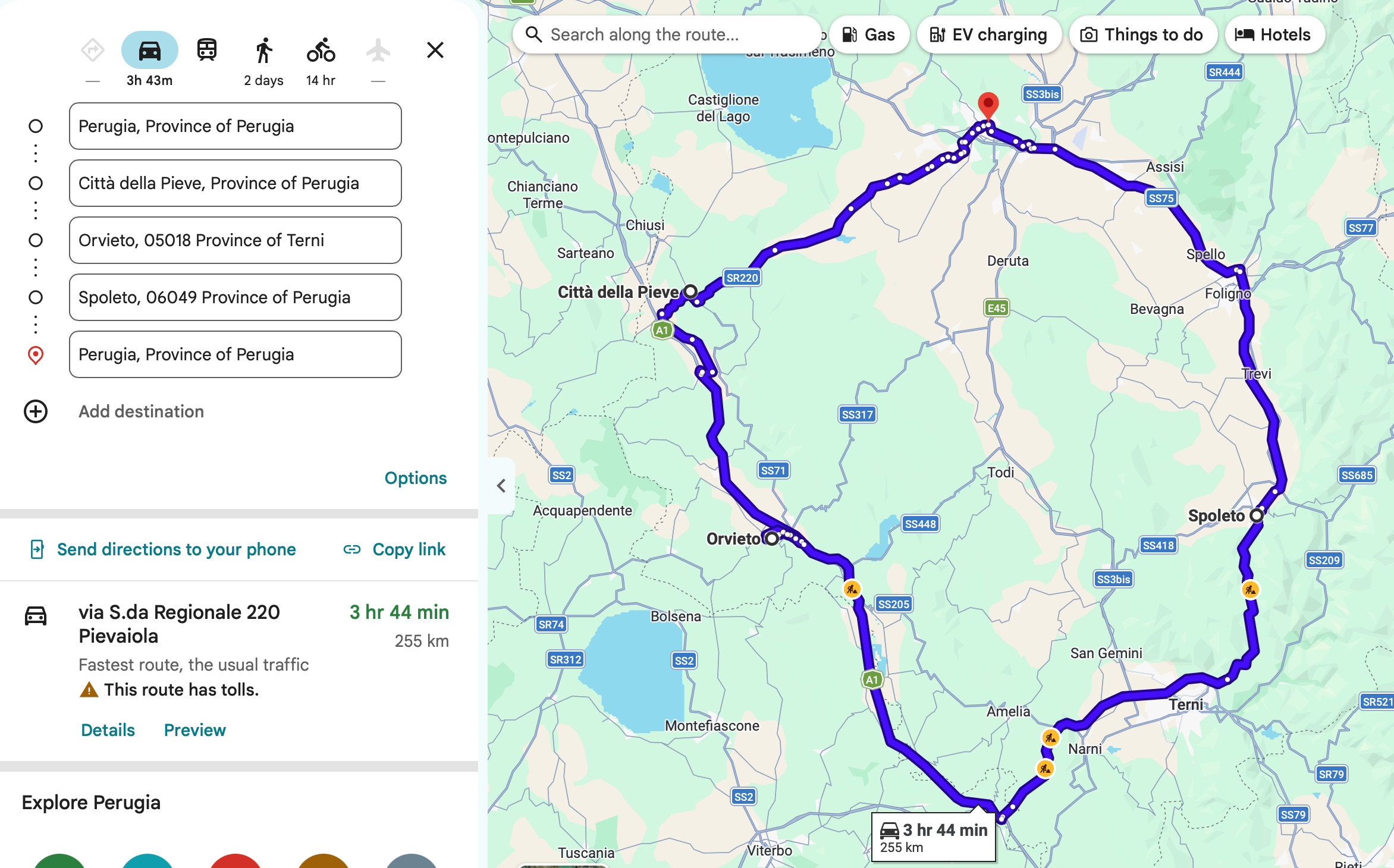
Most people come from Rome (as I did), and others come from Florence. That adds 2 to 3 hours of driving, so a sleepover is kind of mandatory. If you start from Perugia, the circle is complete and can be done in under a day.
did a version of this in two sets. The first was my visit to Todi. We drove up from Rome and entered Umbria from Viterbo. We did the lower part of the circle: Todi, Spoleto, Orvieto, Amelia, Narni, Terni. Then, in a separate round when I spent some weeks at Lago Trasimeno, I did the upper half of the circle: Perugia, Assisi, Gubbio, Città della Pieve, Foligno. It is doable, and it is very convenient to do it in two goes, so again, I suggest a sleepover somewhere halfway.
The Circle gives you the best introduction to Umbria as a region. The drive itself is safe, half of it goes along main roads (sometimes even highways, like the A1), and Umbria generally has very good roads. For some towns, you need a 10 to 20 minute detour on smaller roads, which is totally fine. The stops are à la carte: you stop wherever you want. I recommend Orvieto, Assisi, and Amelia as mandatory, plus Gubbio if you can take the hour-long detour north, because they are the most beautiful, unique, and also popular, but honestly, it is totally up to you. Aside from Assisi, you won’t meet any crowds, since most of these towns are largely unknown to international tourism. Which is the best thing about them, frankly.
Because you can enter the Circle from multiple directions, you can take as much time as you want, and, as I already said, the journey is up to you, the structure of this post is more like a list of towns, aka your à la carte menu of possible stops. Just to keep some order, I’m going counter-clockwise from Perugia.
Citta della Piave
The red city. It has a unique look because of the local terracotta bricks used to build the entire historic center. It is the first town you reach south of Lake Trasimeno.
Alternatively, a great quick stop is Panicale, a small walled hilltop town that sits closer to Lake Trasimeno. From the town walls, you get one of the best panoramic views of the lake. For those who collect small villages as scenes, Paciano is worth a stop as well. It was built to watch over the lake, with its towers and walls still standing.
Orvieto
The next stop is down by the highway: Orvieto. There is one reason why I think it’s a perfect place to stop: it has amazing restaurants and a busy historic center. It is, of course, a beautiful walled town sitting on a hill, and it also has a large and amazing duomo. But the reason to stop is to have lunch or dinner here.
Montecchio
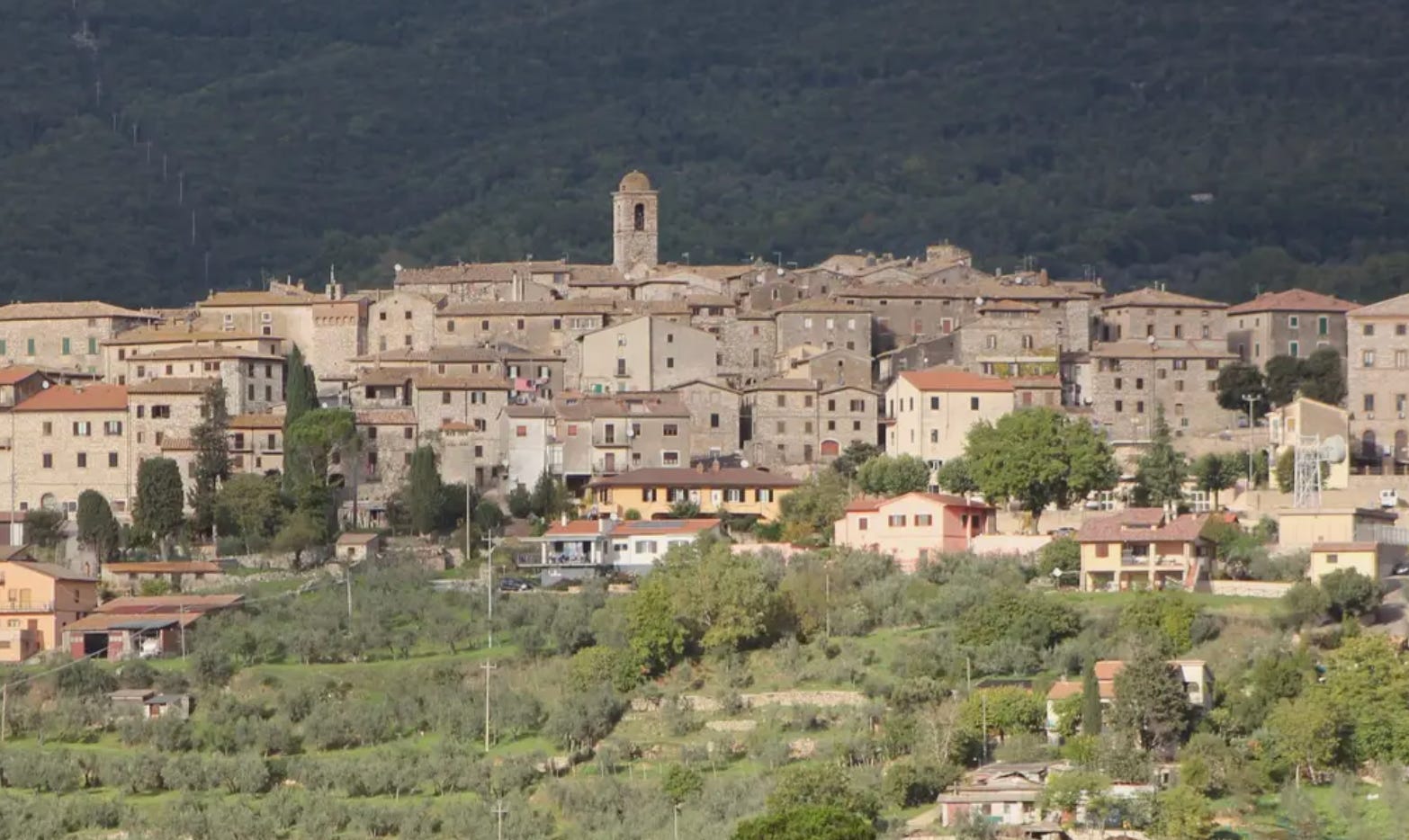
Along with Orvieto, Montecchio also has deep Etruscan ties. I wrote an entire article about Etruscans, and how important their tombs are to understanding their history. Montecchio has a sizeable necropolis, so it’s worth a detour if you are into history. Like Paciano and some other towns on this journey, it also sits in good olive oil country, so make sure you get a bottle from a local shop.
Amelia
Oddly, Amelia was the first town I saw in Umbria as I was driving up from Rome to Todi. We stopped there to find a bar, for a coffee or something else. It is one of the best-preserved ancient towns in the area, ringed by massive pre-Roman walls built from huge fitted stones, with Roman cisterns under its main square. It takes an hour to walk around the historic center, perfect for stretching your legs. Parking is in front of the main gate, so very convenient.
Narni
It has a ring to it, probably because you’ve heard it before: Narnia, the imagined kingdom of C. S. Lewis, Christian-rooted, with the big talking lion (Aslan). To be honest, I always favored the works of his close friend, Tolkien. As far as I know, Lewis never set foot in Narni, but he took the name from this town’s Latin name for his famous work. The town itself is a hard climb; you are ascending to the upper summit of the main piazza (Piazza dei Priori). Worth the stop, especially for dinner. The town sits in a truffle-growing zone, so make sure you try the local truffle pasta.
Terni
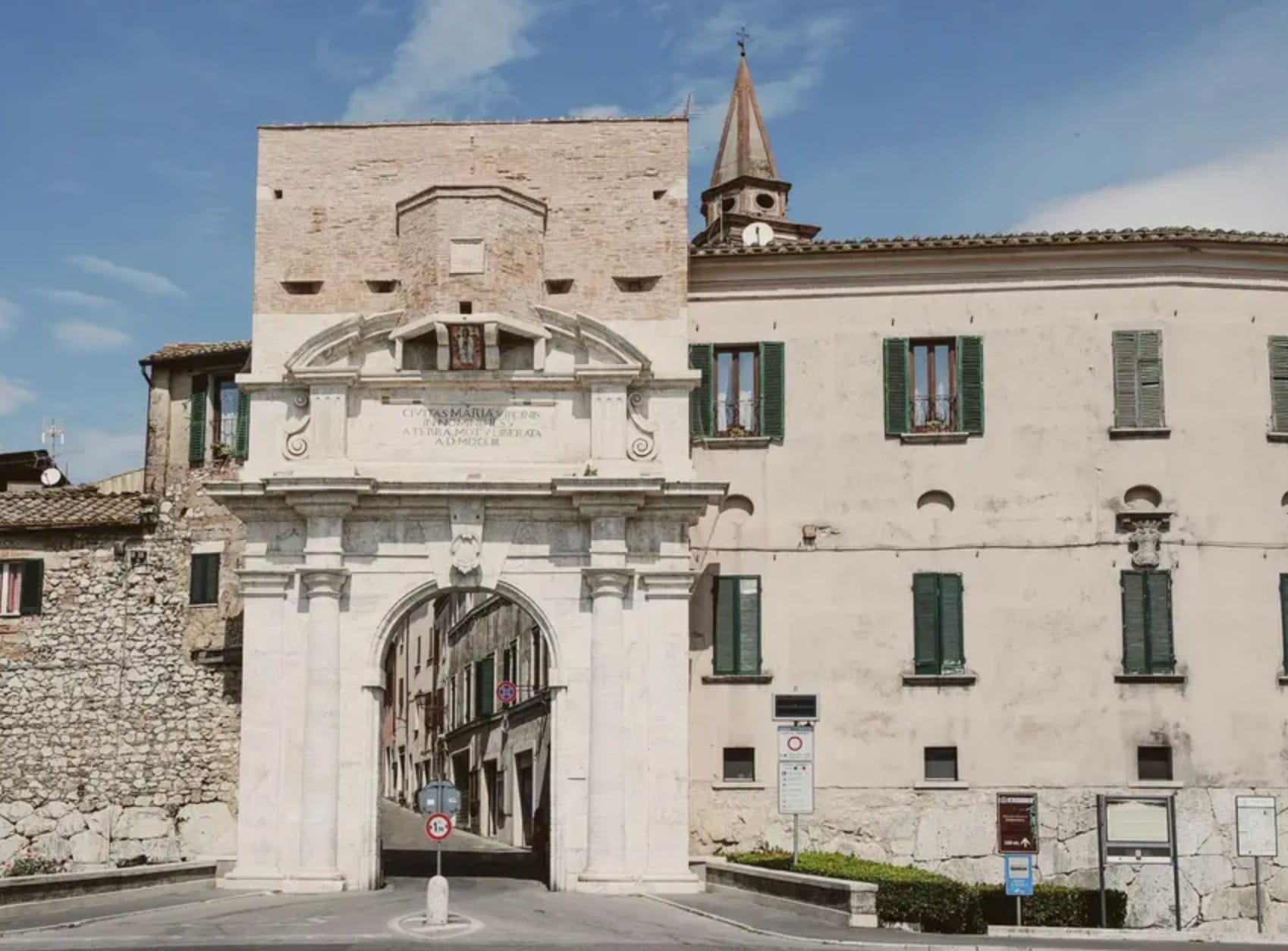
The city of steel and the city of love. Quite an odd pairing. Umbria’s second provincial capital, Terni, is famous for its historic stainless steelworks and its patron saint: Saint Valentine. It has a different vibe from all the other stops, because Terni is a proper city, not a town, with shopping streets, a lively center, and many restaurants and hotels. The historic center is small and the suburbs around it are not that interesting, so either stay inside the center or don’t stop at all.
Alternative: Spoleto. Drive a bit further to reach Spoleto, because it is much more rewarding to stop there. It was the seat of the Lombard Duchy of Spoleto, which ruled much of central Italy for centuries and shaped how Umbria looks today. The historic center is amazing, quite a walk up though, but this is Umbria, and you’ve probably gotten used to it by now. The medieval glory tells you that this city was once an important center.
Campello sul Clitunno
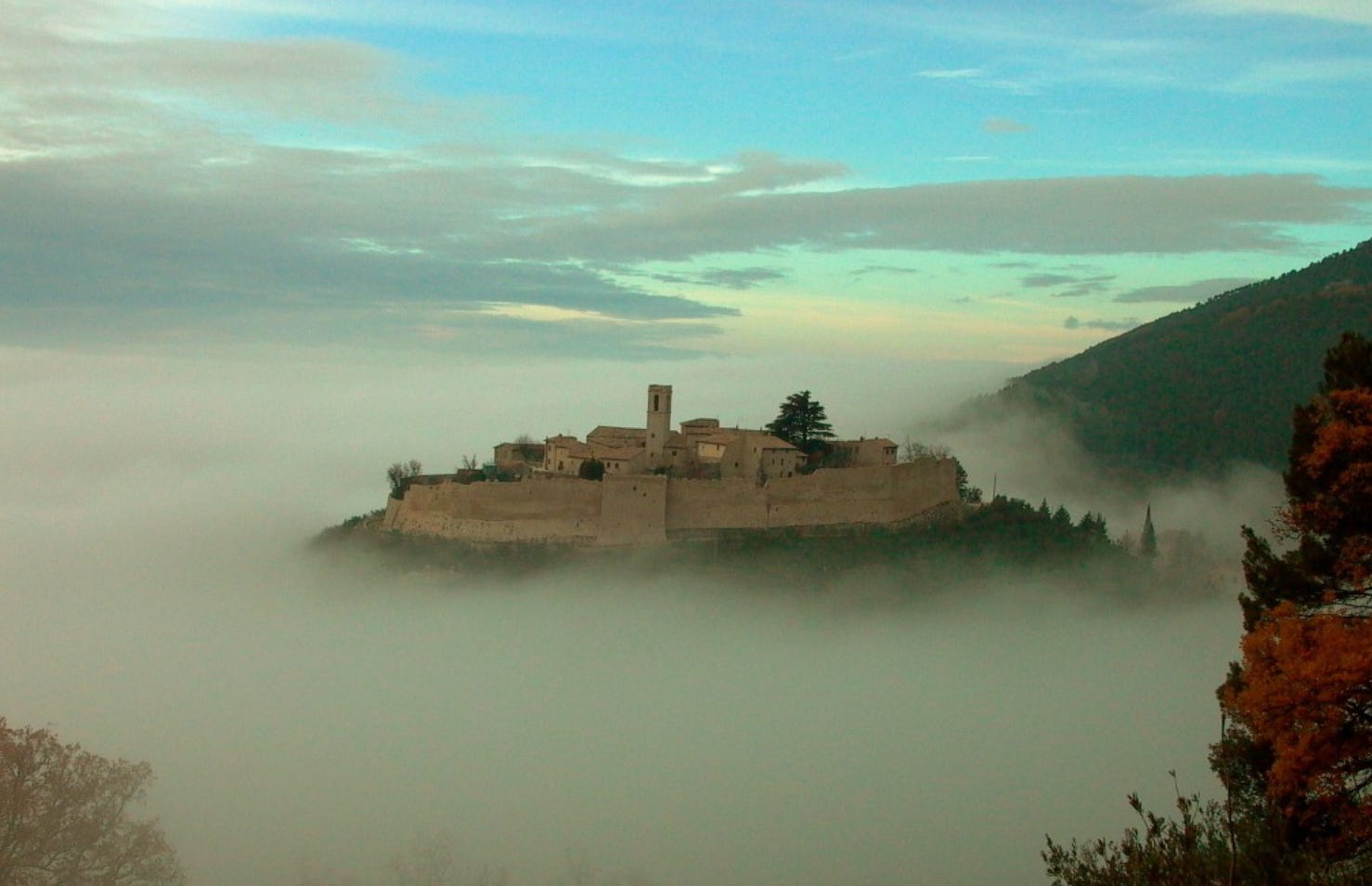
Similar to Montecchio, this is a worthy detour only for those who value history and collect small village experiences. The town sits by the Clitunno river, hence the name. The small village has an even smaller old upper area, part fortress, part castle, part village, which local legend says was founded by a Burgundian nobleman in the 10th century, which is quite odd and far away from most Burgundian lands. The Clitunno river rises from springs down on the valley floor below the town, and right by the road there is the Tempietto del Clitunno, a tiny early medieval temple on the UNESCO list. This is a very relaxed stop, with lots of walking, and I can guarantee that almost no one will be there. Alternatively, you can just pass it on the road; the walls can be seen from far away.
Montefalco
I like this town because it is a perfect start towards Assisi. Its former church of San Francesco, now the town museum, has frescoes of Saint Francis’s life, the town is built somewhat like Assisi, and it is also close to Assisi. The bonus is the view. It is called the balcony of Umbria, and a stretch of walk along the walls gives you a panoramic view of nearby towns: Spello, Foligno, Spoleto, Assisi, Perugia. Also try the local wine, Sagrantino, ideally a glass during your walk.
Alternatively, Trevi or Foligno. Trevi because it is one of the most famous olive oil towns in the area, so the food in the historic center is amazing. And Foligno because it is a different experience from most Umbrian towns: unlike the others that sit on hilltops, Foligno lies in the valley. It is flat, easy to walk, and has a different vibe.
The road here ends with Assisi and Perugia, both of them have their own separate features to read. The Circle completes.
Some random towns that might worth a detour at any part of the journey:
Bettona, the only Etruscan town ever built east of the Tiber, today a beautiful small walled town.
Torgiano, a river town among gentle hills, and a DOC/DOCG protected wine town.
Acquasparta, a town with a historic academy and it’s own famous water (Amerino). I wrote an entire article about the cult of bottled water in Italy.
Scheggino, the black truffle town on the banks of the Nera river, which lies in the valley and is famous for its giant truffle frittata.
Allerona, simply because it has a small village historic center, built from stone, that has barely changed since the Middle Ages. It’s properly medieval.
And, of course, all the towns mentioned in the Lago Trasimeno article are also worth a stop, they are all on the circle, so Castiglione del Lago, Magione, Passignano sul Trasimeno.
Normally, roadtrips only show you the surface. But in regions like Umbria, where you have little to no expectations because you know almost nothing about the towns, a roadtrip is a good option. Also, not many regions can be done in short roadtrips like this. The terrain is hard, the detours require bases, and so on. Here, you can do it in a circle, in a day or two. And by the end of the road, you will have some idea of what Umbria is all about.
Then you can decide to return for more, or stay forever. Both options are highly recommended.