


Hi, I’m Peter, and you’re reading Anywhere Italy. Our mission is to cover the 1,000 Italian towns most travelers skip, in person, one at a time. Come along for free, or pay to keep us on the road.
This article is part of a series that helps those who are considering moving to Italy for the longer term, but are not quite sure where. For more information about the series, my POV, and to read the overall intro (it is important!), start from the first part.

For tracking, here are the other parts (will be links once all of them are written):
Part 3 - The city
Part 4 - The postcard
Part 5 - The other half
Part 6 - The Best Towns
The Postcard
I wanted to say that this will be the most controversial part of this series, but wait until we start talking about the differences between North vs South of Italy. Anyway.
A postcard location is hard to explain. San Gimignano is a postcard town. Siena is one. To some extent, Pisa is one, though Pisa is lucky to have the tower at the north edge of the city, because the south side of the Arno is kept for locals. Most small towns in the Cinque Terre are postcards, especially Riomaggiore and Vernezza. In some ways, Assisi is a postcard. And for sure, Rome, Florence, Venice, Milan, and Amalfi are postcards.
Visiting these places is amazing. People fly over oceans, take out lines of credit, ask their peers for cash, save up money for years, just to see these places. People organize weddings there and call it a destination wedding. Postcards are covered by magazines, they’re part of lists, and you can read “off the beaten path in <insert postcard name>“ articles about them. And, with some exceptions and workarounds, it is absolutely horrifying to live in these places.
So, I can’t put them into a geography or demography terminimology for you. Some of them are capitals, regional centers, others are small towns. In a way, the entire Val d’Orcia is a postcard, where you can’t cross between towns without zigzagging influencers stopping their pink Fiat 500 and taking pictures of random cedar trees… But, all postcards have three baselines:
They are popular with mass tourism. The reason doesn’t matter. They might have landmarks, like Rome or Florence, or be a landmark as a whole, like Val d’Orcia or Venice. Bottom line: there are thousands of people daily who march through these cities and leave the next day.
To survive and actually be able to enjoy these cities, you need to know the tricks. Workarounds. The real off-the-beaten paths. You have to be super-local so you can live like the very few people who actually live there.
Example one: everyone goes to San Marco in Venice. Almost no tourists make a trip to Giudecca, and only a few make it to the back of Cannaregio. Chioggia is also spared from this Disneyland tourism.
Example two: everyone goes to the Vatican, Trastevere, and the Centro for the Trevi Fountain and the Colosseum in Rome. Basically west of Termini. No tourist goes to San Lorenzo. It’s a 10-minute walk, by the way. If you live there (I did), you are close to the center and you see zero people taking very original selfies.
To live in these cities, you have to be committed. Either by paying more for everything, or by managing the previous point: surviving the fridge magnets. The question is, would you pick these places if you knew that there are better and more relaxed alternatives?
You might see the picture here that for a postcard, most things depend on these people…
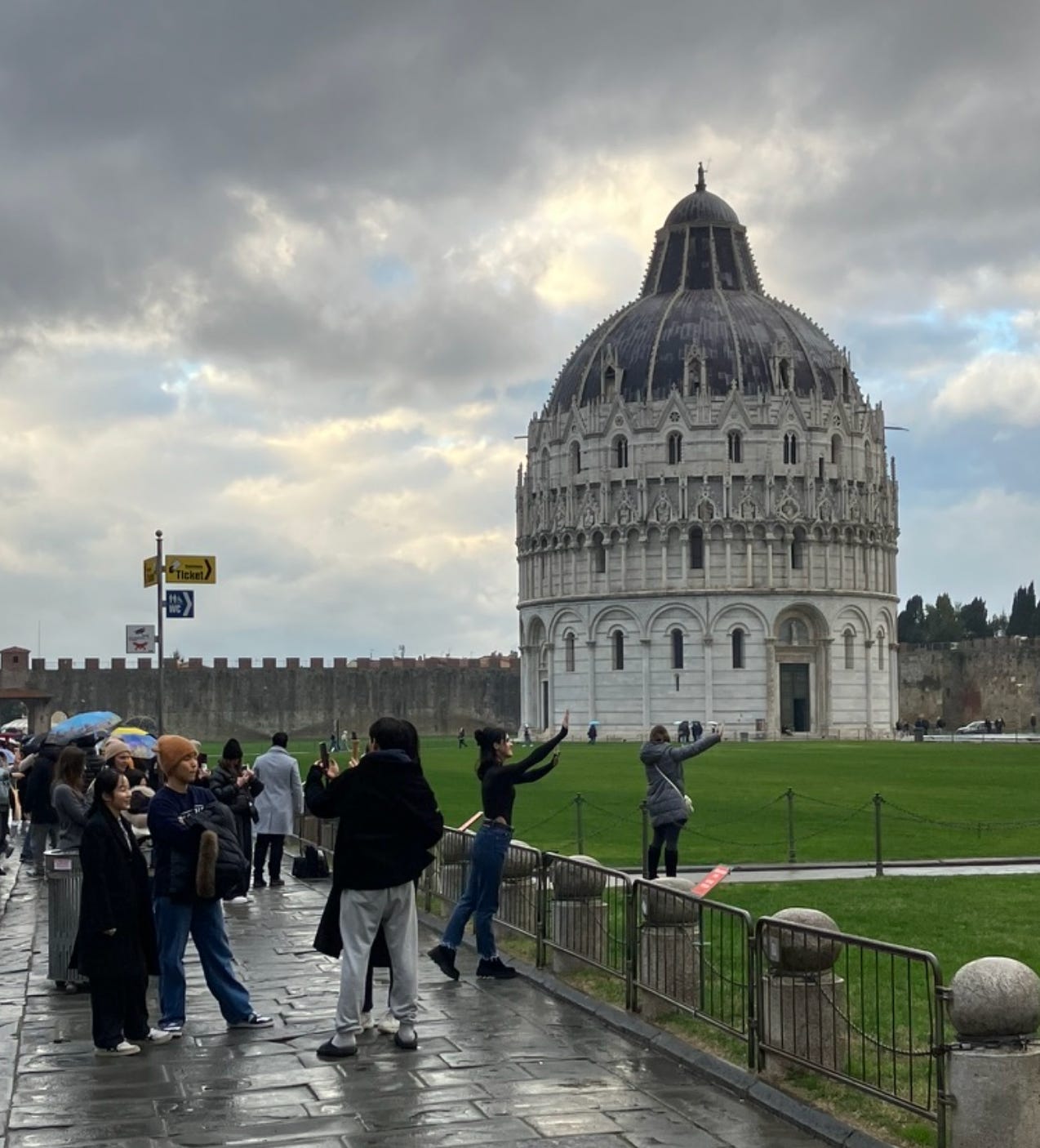
I would argue that none of them have any idea what they are looking at, but hey, they have the selfie, the original one, the unique one, that no one else has, only them. Just by looking at the picture, I feel massive secondhand shame. The astronomical, planet-sized cringe.
Regardless of how much my gut disagrees with me, we need to talk about mass tourism, and I need to put on my “Peter with empathy” face. Not because I want to sympathize with them, god forbid, but because it helps you avoid them, and if, despite all the warnings, you want to live in a postcard place, you can do so with some compromises.
Tourists. The number one thing to understand here is time. Vacationing is about time. People have limited vacation time. They want to see a country, in this case Italy, within a limited time. Open up Reddit and check Italian travel itineraries.
Hi, I’m Jimmy, I am planning my wedding trip, I want to propose to my fiancée in Riomaggiore (how original, Jimmy), and we have 12 days to see Italy. As of now, our trip includes: Florence, Rome, Pisa, Cinque Terre, a day trip to Chianti (it’s a wine, Jimmy, not a town), and Milan. Do you think Venice can fit into this, or would you suggest something else? Thanks a lot for helping!
I am not even joking here, this is a pretty generic itinerary, and people seriously think they should do this. And it is mostly because they are very short of time. Most of them are Americans, by the way, and if you are reading this from the US, I know, minimum annual paid vacation days are just as incomprehensible to you as free universal healthcare. It is not your fault, but it is the setup, the hand you were dealt. Gotta make it work anyway, right?
Once you understand this concept, that mass tourism is driven by time, you understand that most tourists simply don’t have time to see anything properly. I used Pisa as an example, so let’s go with it again. The reason most of them never go to the south side of the Arno is not that they are ignorant. It’s because they have no time. Most people visiting Pisa are coming off buses. They run to the tower, maybe walk around, have a meal at one of the restaurants there (zero locals eat there, they avoid it like the plague), and after 3 hours, they are off, back to Florence or to Cinque Terre. They have no time to stroll along the Arno. Who’s gonna file the financial reports tomorrow at the office?
Also, destination weddings? People literally fly over the ocean, dress up 1920s mafia style, because “that is the theme” (taste is not something you can acquire), eat fake Italian food, spend a week (maybe) in a countryside villa or a small town hotel, bye, “we have a pitch next week in Austin.” Can you blame these people? I don’t think you can. Maybe for the lack of taste. But you sure as hell can avoid them, now that you know they have no time to stroll around outside of the landmarks. Again, literally no one goes east or south of Termini in Rome. The Roman aqueducts are out there, by the way, in the Parco degli Acquedotti to the southeast. There is your landmark. Still, only locals.
There are some tourists, yes, who do have the time. But they are either pensioners, very rich, work online, or it’s not their first time here. Either way, they are not better than the first ones. They are just different. They have the time. They are the ones sitting in nameless borgos in Tuscany. They are the ones eating at a seafood restaurant in Chioggia and speaking English. They are the ones who skip Trastevere and go straight to Testaccio, or Monti, or Prati in Rome. They are the ones who visit the agriturismos or hike up to the mountain towns. They simply have more time.
So, with that in mind, if you are committed to living in a postcard location, you should immediately figure out where tourists concentrate. Look for the landmarks. Understand that 95% of the tourists will focus on the immediate vicinity of these landmarks. Draw a circle of 1-2 km, depending on the place you are in. You will know which streets are off-limits and which ones are OK.
In Rome? Anything north of Piazza del Popolo, south of the Colosseum, east of the Borghese Gardens, and west of the Vatican is a place where you can live with no or minimal tourism. In other cities, the walled centro, or the “centro storico,” the historic center, is the giveaway.
Oh, one thing. Why would you want to do this? Why not just live on Campo de’ Fiori? Why not just live right by San Marco? You can. But the closer you are to tourism, the more distorted your local experience is. Prices go way up to unrealistic levels. The food gets corrupted (tourist menus and Bolognese pasta in Florence). Crowds. The shops are for visitors, selling trinkets, scams, or luxury items. The 55 EUR cheese set gift box with a jar of pesto. The same stuff is 5 EUR outside of the infestation, and it is probably freshly made. I can go on. There are some quiet streets within these areas, I agree. But the moment you step out and walk 50 meters, you end up in a theme park, not in a city that you can actually live in.
But sometimes you are committed, I get it. So, let me tell you what it means to be committed, because I have lived in three postcards, actually: Rome, Verona, and Florence.
Rome is every Italian’s favourite city (sorry, couldn’t resist, of course it isn’t, universally hated by everyone except Romans). Whatever you think about Rome and whatever you think about tourists, Rome is still a local place. The city is big enough that you don’t need to hide from tourists, you can simply ignore them. I think the Pantheon is a great center point, so put that on the map and draw your 1.5 km circle. That’s the area you don’t go to.
My local amico, Alessio (if you are reading this, forza Lazio), explained this clearly. He visited the Colosseum once (didn’t go in, just went past it), because the girl he was working his magic on wanted to see it as part of a date with a local Roman gentleman, so he did what he could: he put the girl on a Vespa and drove past the Colosseum. “No girl is worth so much that I need to get in line to see that thing…” as he explained. The Vespa tour was enough, by the way, they were still together last time I checked. Alessio lives 25 minutes on foot from the Colosseum. It was a short Vespa tour. He is 45 years old and went past the Colosseum once. Let that sink in.
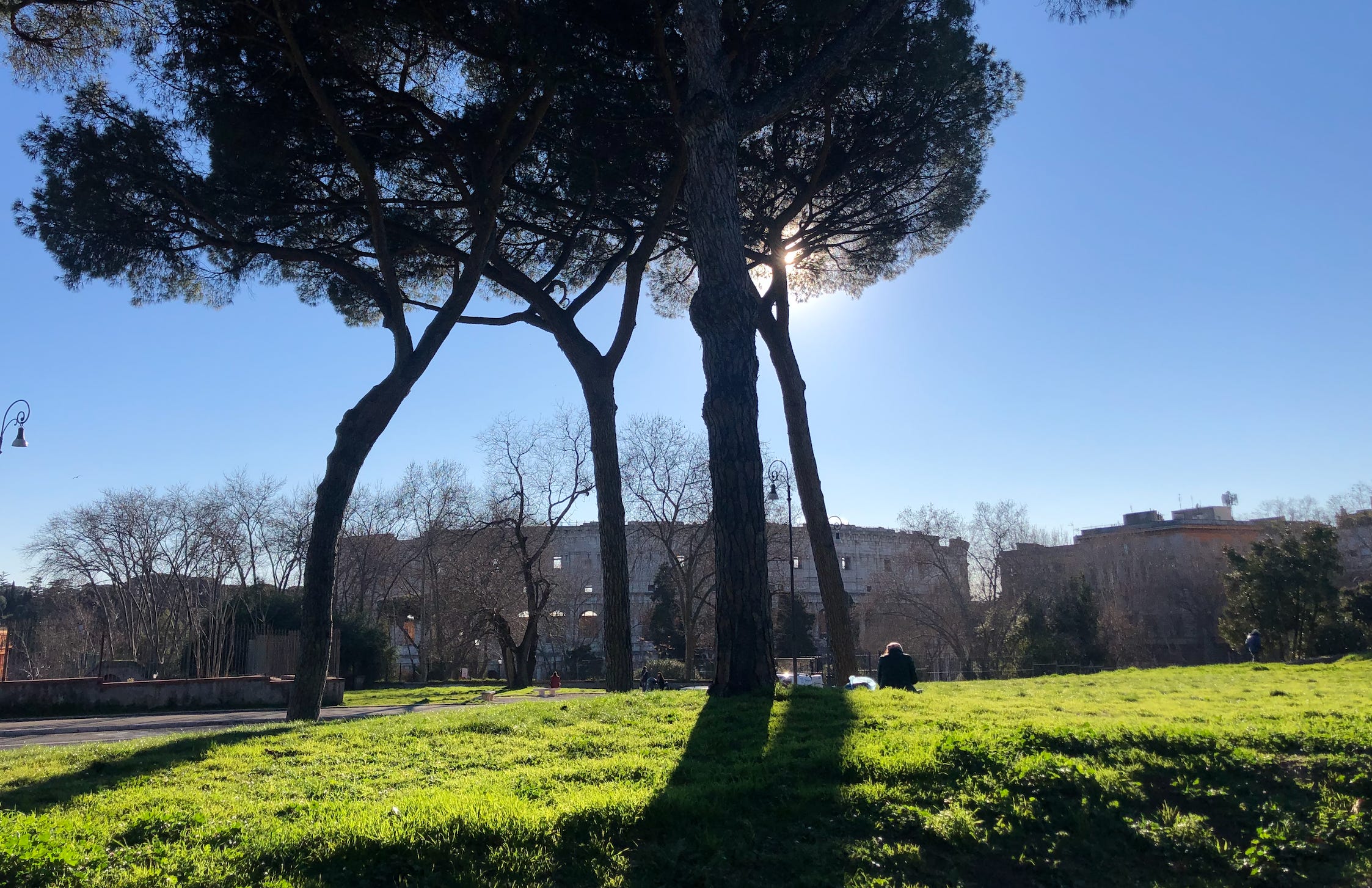
Rome is big enough that you can ignore tourism. The city has many problems, mostly connected to the fact that it is borderline dysfunctional as a city (as some Italians say, “mafia capitale”), but with cash and a good choice of location, you can live a very good life in Rome and never have to worry about bumping into people weirdly following napkins tied to held-up umbrellas.
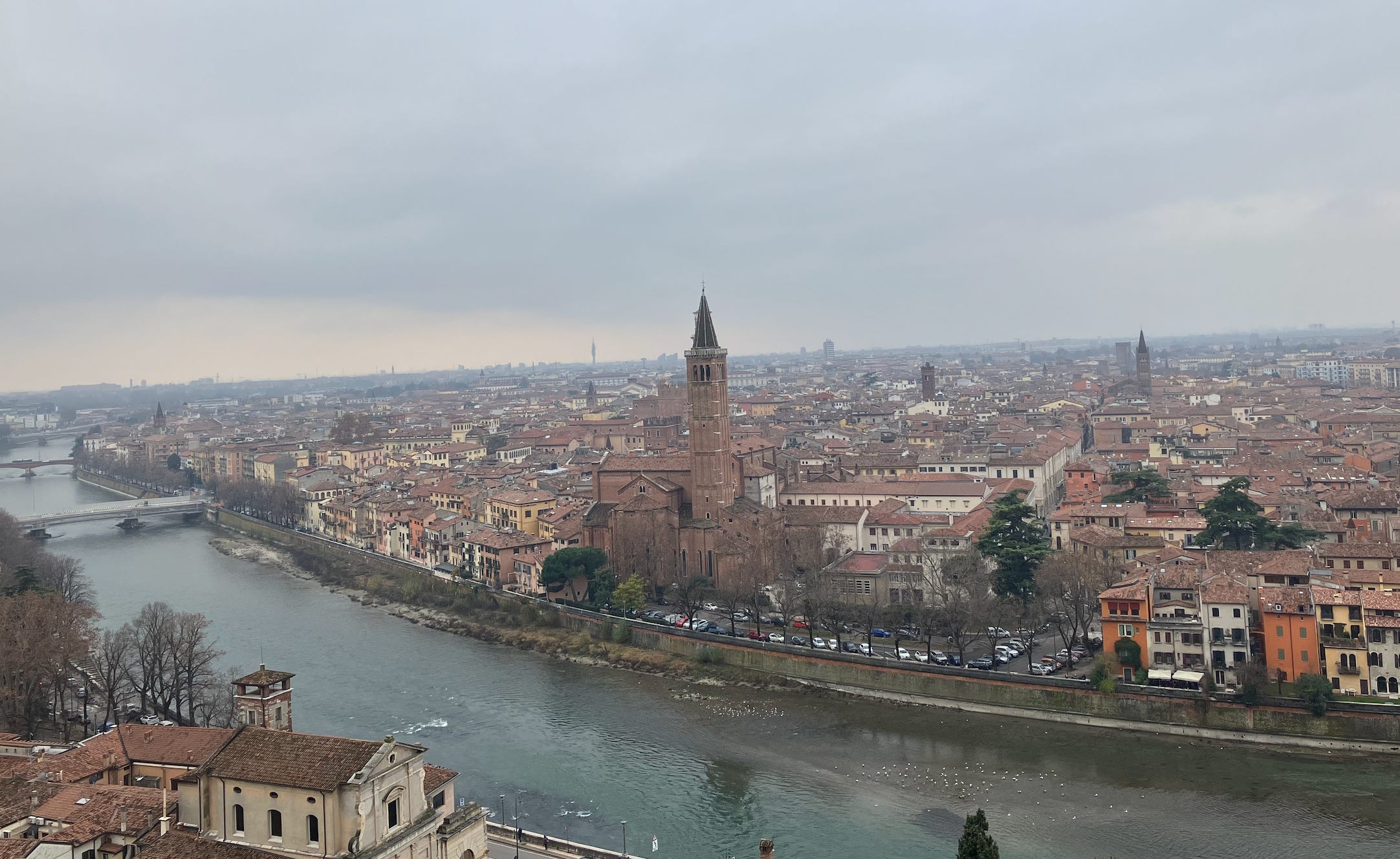
Verona is different. The historic center is less popular than Rome’s. For most visitors, Verona is a day trip to see Juliet’s balcony. It is obviously the stupidest thing you can do in Verona. FYI, it’s the best official scam, ever. The balcony was added to an old medieval house in the 1930s, by the city itself. Random. Later someone did a bronze statue of Juliet. Amazing, really. That said, almost no one goes to the Veronetta or San Zeno areas, not to mention the north side of the Adige, with Borgo Trento and Valdonega. And, of course, literally zero tourists who see Juliet’s balcony visit the hills of Valpolicella. Maybe, just maybe, some of them go to Lake Garda, but those are considered the adventurers, to be honest. Italians? They go to the Piazza dei Signori only during the annual wine festival, avoid the balcony like the plague, dine & sleep in Veronetta, and take trips to the wine hills. But Verona is different from Rome. Fewer tourists. Fewer crowds. Yes, you can bump into groups in the centro, but you can enjoy your city as a local.
Another is Florence. Similar to Rome and Verona. I lived there for multiple weeks, almost a month, and since I was living an hour away from the city, we visited more times than I can count. In Florence, everyone goes to the historic center around the Duomo, because every landmark is there. The cathedral, the market, David, the Old Palace, the Old Bridge, everything. Florence is also not a big city by landmass, by the way, not sure if you have noticed. It is pretty concentrated, and the Duomo is the epicenter. Do people go up to the hills on the other side of the Arno? Do people go east, past Santa Croce? Do people go past Piazza della Libertà? No, not many, almost none. So you can sit down at a bar on the side of the Arno and enjoy your whatever in peace.
The last example is a small town. Let’s go with San Gimignano, with its famous towers. The town is small, it is literally a handful of streets in the old town. It is also a day-trip town, so people in Florence come to San Gimignano for a couple of hours of strolling. It was in San Gimignano where I saw the most literal example of how restaurants (not all of them, but I won’t name the one) cater to locals vs tourists. Almost no one stays in San Gimignano after 6, because they go back to their hotels in Florence. So dinner is mostly local. I saw this in many places: the lunch menu is classic Tuscan stuff plus “pasta bolognese,” priced at 20-30-40 EUR. For a pasta. Dinner? Fully local food, and the price drops by at least 50%. Suddenly, no tourist menu, booking is required, and it is only in Italian. Finally. Also, you can actually walk around the town after 8.
But see, this is the problem here: this town is small. In Rome, you can avoid the theme park during the daytime; you just need to know how. In Florence and Verona, you can do too, but the cities are smaller, so you have to make compromises. In San Gimignano, it’s hard to avoid, since the town itself is small. The town itself is the landmark. You have those 5-10 streets, shared with everyone. Want to have a daytime lunch somewhere? Good luck finding an original place. If there’s any advice here: never move to a postcard small town, that is the worst-ever decision you can have.
But my point is always this: will you commit to these cities? You will pay more in rent or property, because half of the city is Airbnb. You need to know where to eat, where to buy, and where to go, and you have to be very sure you know what you are doing. If you don’t, you end up eating something that is not even local there, priced like you’re in Toronto. Or do you even care? Some people don’t. I understand and accept that.
Personally, I think there are better alternatives. Less stress, less money, less commitment, same experience.
The entire reason why Anywhere Italy exists is to give you the “instead of that, do this” mantra. I collected the 1,000 hidden towns of Italy and track them on multiple factors that are useful not just for travelers but for expats alike. From those 1,000, I filtered the best of the best, a totally personal selection, the Top 100 towns. It’s totally free to check them out. Most of them are not postcards. But they give you a postcard-level experience.