Forever straniero
Sunday Espresso XXI.

Hi, I’m Peter, and you’re reading Anywhere Italy.
Our mission is to cover the 1,000 Italian towns most travelers skip, in person, one at a time. Come along for free, or pay to keep us on the road.
This letter will be a bit more personal. I’ll talk about integration: how to, or should you, integrate into a new country’s culture, and to what extent? I have a very clear opinion on this. You might not like it. And it is personal, because this is my story.
Before I jump in, FYI, I’ll have a live call with Barbara - Timetobeitalian next week, which I am very much looking forward to. To be honest, she was one of the triggers for this post, because she asked about my tagline, forever straniero, which means forever foreigner.
You can tune into that call here next week, Wednesday, November 18, 5:30 PM, Rome time. Use this link to join or save it to your cal: https://open.substack.com/live-stream/454281
So, why forever straniero?
You know you remember memories where there’s a big emotion. The bigger your emotion was back then, the clearer the memory you hold still today.
I have a few of these memories of my own. One of them, I remember like it was yesterday: touching down at Atlanta airport, not long after the Olympics. I remember that I had to walk half an hour in a giant stadium-like space, just to get my passport checked. I remember the insanely large and comfortable car that picked me up, with a dude that had probably 64 teeth, all of them white like marble, ear-to-ear smile. I remember the Atlanta skyline passing by. I remember almost all the days and weeks when I toured the South of the US.
I was 16, a teenage boy from a small Hungarian town, from a country that just a few years ago was behind the Iron Curtain, and had not yet joined NATO or the EU. I had just won a scholarship from the Soros Foundation (yes, that Soros, he is Hungarian) to visit the USA for some time. The USA, which was at that time in her prime, the roaring 90s. The towers were still standing, capitalism was in full power, and yeah… pedal to the metal. And I was in the South, so, imagine that.
No one feels comfortable at home after an experience like this. After I returned, everything felt small, narrow, tiny, and shackled. No wonder that at first, I moved to the capital, Budapest, then moved to London within a decade. I have never ever felt homesick and I have never ever felt any nostalgia. Still can’t, even though my parents and sis live back in Hungary and we are on close terms.
Now I live in Italy, not because I have found love here, or married here, or migrated here for economic reasons, or I retired here. I am here because… why not? It’s the best place to be in.
But, how about integration?
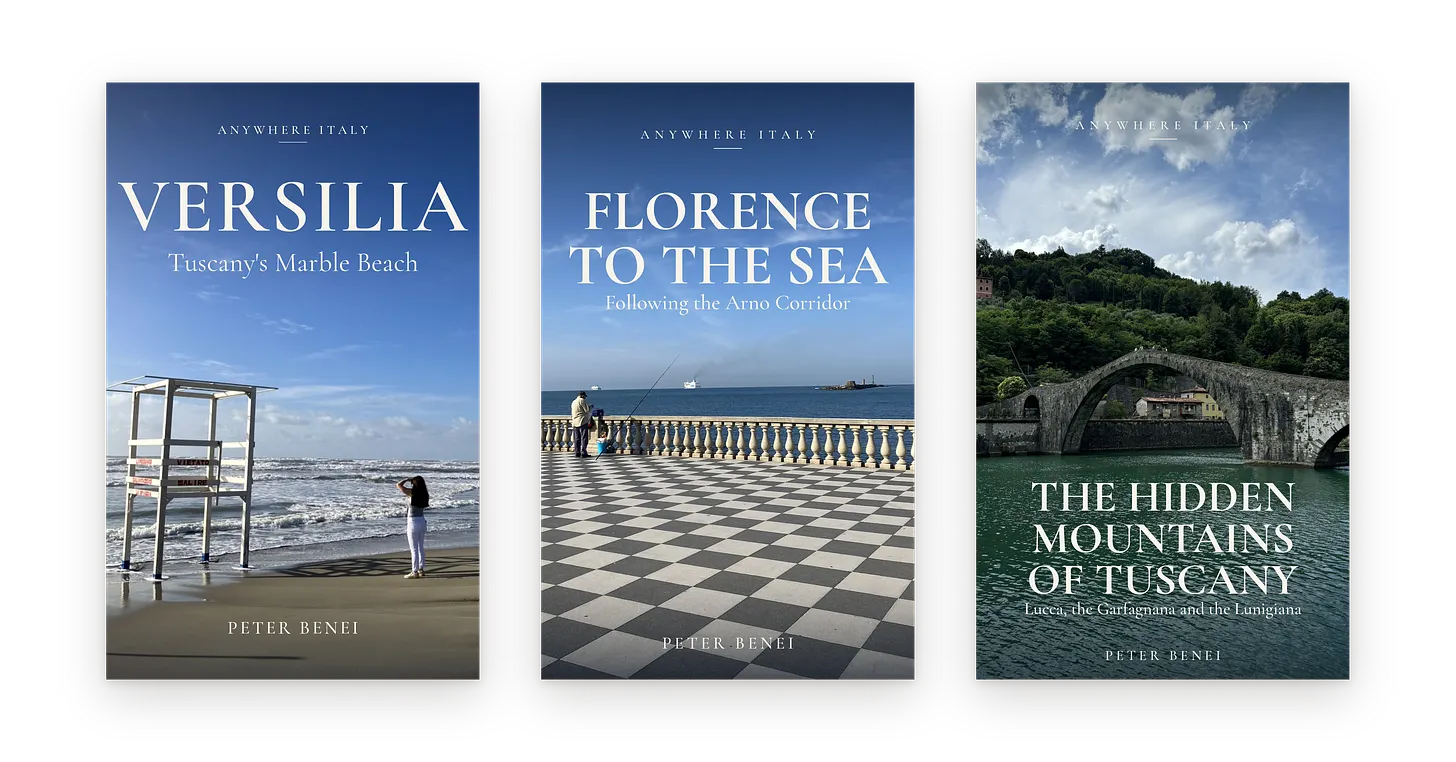
Everything I write is free for its first four weeks. After that, only paid readers can access all the guides and dispatches, as well as the books I write, like these three, and the ones still come.
To gain access, get the annual plan and pay 10% less, forever.
This is where I might upset you. Let me tell you a story of a friend of mine, I won’t name him. We had a BBQ together with his family in Oxford, and I remember this afternoon just as clearly as I remember Atlanta.
I was in my first year in London, 30 years old. My ex-wife was a doctor so we had some friends who worked as doctors in England. We visited one of these friends in Oxford. He was Hungarian, his wife was Hungarian, and their kids were Hungarian, two girls, a 7 and a 9 year old, I think. Can’t remember their age but they were both in school for more than a year in England.
I remember that we were speaking about Hungary and Hungarian politics. It was 2012, so the famous Orban regime had just started, one of the reasons why we left, among many. Then, I heard the two little girls playing together in the garden. Again, both Hungarians, who had spent their first 5-6 years in Hungary. Right there and then, these two girls spoke flawless British English. To be honest, kinda posh English. Remove them from this scene, put them down anywhere near Eton, you wouldn’t know if they are British or Hungarian. When we addressed them, they answered in perfect Hungarian.
To me, this is what integration means, by the way. You are indistinguishable from a native.
I’ve told you this story to back up my brutal statement: I don’t think integration is a thing at all for first generation immigrants. You should not chase it, because it is pointless. It is an option wide open for the second generation and beyond.
But that doesn’t mean that you won’t be part of the culture of your new home.
I live in Italy now and I speak Italian (well, trying to). I own property here and I even have some local friends now. All my daily life is within Italy, so even when I travel home to Hungary, I feel like I’m a tourist, or someone on a vacation in a country which I know oddly much about. My main passion project is Anywhere Italy. Not Anywhere Hungary.
Does it make it less of an experience? I don’t think so. Being a foreigner who actually lives here gives you a superpower: reflection. You are not so deeply embedded into the culture that it blocks your vision, you are cruising above it, which gives you somewhat of a bird’s-eye view. Being part of this, but never fully integrating or submerging in it. It’s interesting, for sure. It is also liberating: you don’t have to deal with the inner cultural mechanics if you don’t want to. I don’t even work here, so that’s one less thing tying me to local life.
With that all said, I’m still a straniero, as I was a straniero everywhere. Even at home. Honestly, I like it that way.
Updates of this week
We have came back to Pietrasanta for a few weeks. We still have the apartment here so we’ve figured why not spend some time down here, since Turin is a bit grey and rainy now. So, it goes so well that I spent less time writing, and more time living, so only one article went up this week. It was a much-cherished memory about Chioggia, near Venice:

Next week, I’ll write more. :)
Alla prossima,
Peter
Pietrasanta, November 15, 2026

Discussion about this post