


Hi, I’m Peter, and you’re reading Anywhere Italy. Our mission is to cover the 1,000 Italian towns most travelers skip, in person, one at a time. Come along for free, or pay to keep us on the road.
I wrote a guide on Italian politics recently, and I mentioned at the end that I am in debt on writing about crime, safety, police, and sadly, everyone’s favourite topic: the mafia.
I am going to address the crime and safety topics separately and focus this essay only on the organized crime. On the safety and crime topic, TLDR: Italy is one of the safest countries in the world, so whatever you hear or see online, look at the actual numbers and know that in Italy, you are very safe. Japan-level safe.
I usually open with a personal note on all my essays, and all my travel writings are based on personal experiences. Thank God, I can’t give you that here, I have no experiences on the mafia, aside from the movies, books, and historical knowledge I’m about to share here. So strap in.
The Godfather is a lie
So, since this is an essay for foreigners, I’m going to go with movies as a main spine. And when I say mafia, everyone sings like a choir: Al Pacino, Marlon Brando, family, honor, values, and that we immediately hear Nino Rota’s famous theme. Yeah, they kill some people here and there, but man, how romantic the entire story!
Well… There is nothing romantic about the mafia. And the truth couldn’t be further from the Hollywood truth. My advice, if you want to know more about the mafia, watch the Italian movies.
There are many, especially ones that deal with the 80s of Sicily (guerra di mafia, war of the mafia), and the 92-93 bombings (la stagione delle stragi, the season of massacres). But I picked to lead with the Octopus (La piovra).
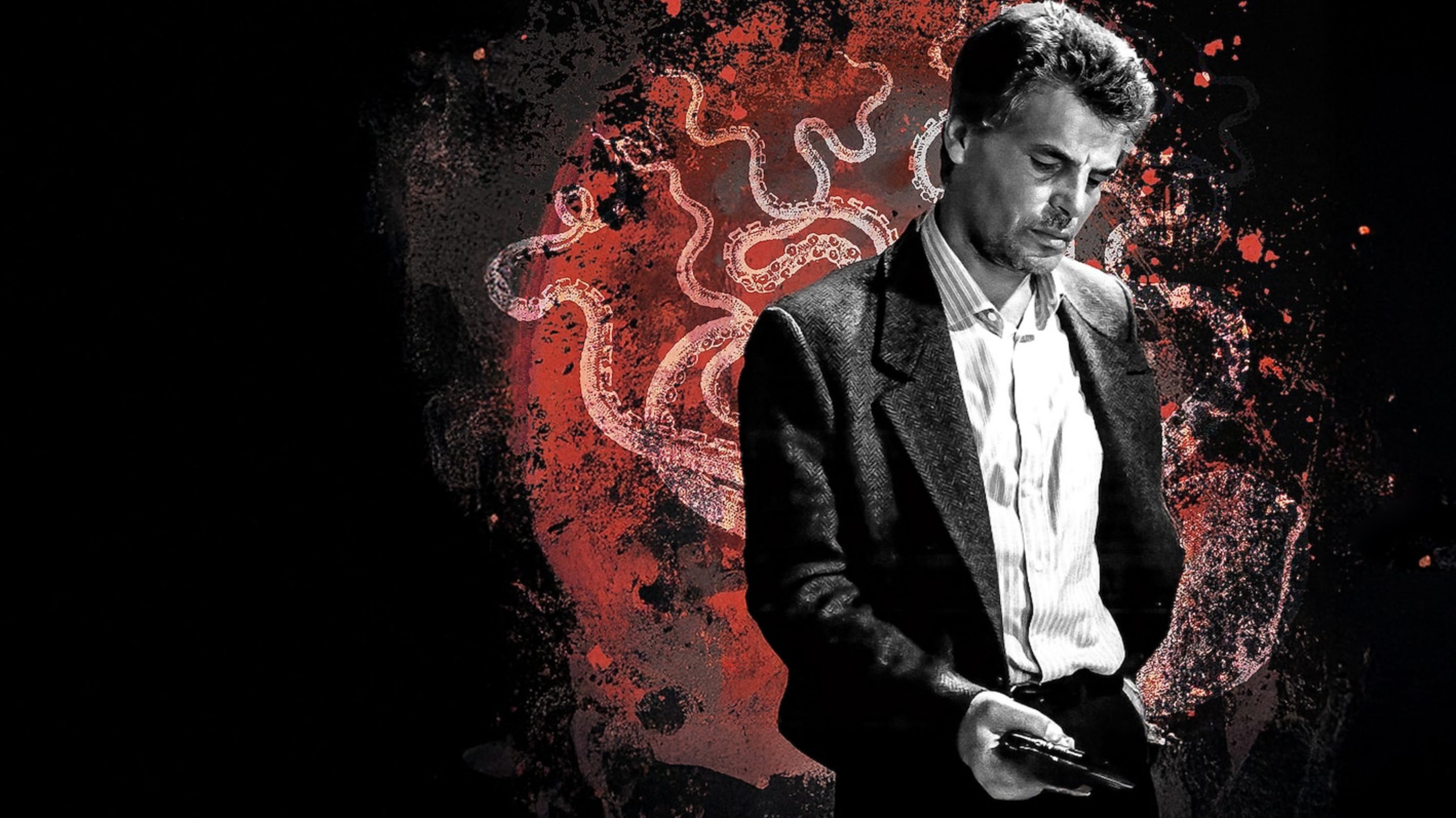
Quick note on this series. It tells a story of an idealist detective, Corrado Cattani, played by the iconic Michele Placido. It is set in the present days when it was filmed, so mid-80s and ran until 2001. The main storyline happens during the late 80s, first 4 seasons, the rest are not that important to see. But the first 4 seasons… Yeah, so they paint a pretty different picture about this topic than the romantic Hollywood pictures. It is super realistic, built on real events, almost scene by scene, and extremely violent.
I’m gonna walk you through the history of the Italian mafia with this series.
Somewhere in Sicily
Series 1 opens with a cop, Corrado Cattani, our protagonist, gets transferred from Rome to Trapani, Sicily. Cattani has ties to the North, from Rome, and the transfer happens because the guy who was running the local police station got shot. It’s the early 1980s, never officially confirmed, but sets in present days when the series aired (1984 March).
During the series Cattani makes the mistake of asking questions on why his predecessor died. The answer goes through the local countess, a smooth-talking lawyer, a bank that cleans money, and heroin trade. And people start to get shot more and more. It seems like if the entire town is involved. Hence why the entire series name: the octopus, which has tentacles that reach to every corner, everywhere, all the time, as a symbol of the mafia.
This was pretty much the early 1980s Sicily, and especially Trapani. It wasn’t a sleepy fishing village as it is presented nowadays. The Cosa Nostra (Sicilian mafia) clans operated the biggest heroin refineries in Europe behind the hills of Trapani, turning Turkish morphine base (coming mostly from Afghanistan) into a product that supplied New York. The Americans called it the Pizza Connection.
The clans were fighting for this trade, but by 1983, the war has ended. The 2nd mafia war involved various clans in Sicily and ran from 81-83, a thousand people got killed. Shooting, bombing, death of spectators, detectives, police officers, soldiers, everyone was involved.
Rome sent down to Palermo its most decorated general, Carlo Alberto Dalla Chiesa to Palermo, a hero for his anti-terrorism efforts during the Red Brigade’s “Years of lead” era in the 70s. Dalla Chiesa became a prefect with special responsibilities and rights, so he could clean the mess up. Within 100 days, he was killed in his car along with his wife and the police escort.
The Octopus’ protagonist, Cattani, is Dalla Chiesa with a smaller office. And remember, the entire series aired during or immediately after these events. Just the first episode sparked so much controversy that this topic became the number one thing people talked about. Finally, after years of silence, it was fine to talk about the mafia openly.
The first season ends with the rule that was dominant during the first four seasons: the mafia doesn’t kill Cattani, but everyone dies or breaks around him. Cattani’s daughter gets kidnapped and his marriage breaks, not to mention the pile of dead bodies around him.
This is also accurate. The mafia knew that killing policemen pulls in even more attention from Rome, which will disturb the business. So the law enforcement people got killed only as last resort during the 80s. But they were all got intimidated and many of them sent their families to the mainland.
That said, many of them died. So next time when you see the Carabinieri armed to the teeth with vests and machine guns, remember, most of them have personal stories to tell and they probably faced more challenging situations than checking traffic in your seaside community.
It is the number one reason why mafia is a sensitive topic. Many people have lost their families over it. This is not something that anyone should romanticize.
Within a year the octopus became a shorthand for journalists who are writing about the mafia. And they started writing about it, finally.
Follow the money
Series 2 aired in 1986. Cattani is back, after a breakdown and a stay in Switzerland, and this time he isn’t chasing shooters, he’s chasing accounts. He attaches himself to an old judge who’s building a case the way the real ones were starting to: not on bodies, on paper.
The target is a respectable private bank run by a respectable Sicilian family, the Antinaris. It’s an Italian series, so even in the most dreadful bloody massacre, you need some amore, so Cattani falls for the Antinari daughter… The money the bank moves is obviously heroin money.
But there comes a problem. Some of the money belongs to people who have offices in Rome. And, as it was in the real life, people start to fall. The judge gets killed, Cattani’s daughter is dead, but Cattani lives. More broken than ever, realizing that it’s not just the local town, Trapani, but might be the entire country be involved in this. The octopus tentacles reach up to Rome.
This is still just a good story on film. But what makes it extremely chilling is that exactly this happened in real life. By the mid-80s the mafia’s problem wasn’t about making money but it was placing the money in safe and somewhat legal hands.
The men who handled these billions were real bankers with real banks. Michele Sindona, Sicilian banker, handled both the Vatican’s and the mafia’s money (how convenient), his bank collapsed, and he was found poisoned with cyanide in his prison cell in 1986. What a coincidence. Ruled suicide. Yeah, right. This happened weeks before Series 2 aired.
Then, Roberto Calvi, “God’s banker”, head of the biggest private bank in Italy, found hanging under a bridge in London in 1982 with bricks in his pockets.
If this is something that rings in your memory, yes, this story was also part of the Godfather, part III, the banker Keinszig is modeled after Calvi. Coppola lifted the entire story off from the Italian front pages. In the Octopus, these events or names are never named, but ever-present.
The judge is real too. The prosecutor in Palermo, Rocco Chinnici, who invented the idea of a team of judges working the Mafia as one organization, blown up with a car bomb in 1983. The chief prosecutor in Trapani, shot the same year.
Season 2 aired a few years after season 1. By then, the series was a cult classic and got much-much better financing. Ennio Morricone started writing the music, and it was simply just more money for production. The Series 2 ended in 1986 March.
A month earlier, in real life, in a bunker courtroom built for the purpose inside Palermo’s prison, the Maxi Trial had opened. 475 defendants in steel cages, built entirely on the evidence that the series’ fictional judge was collecting, plus a testimony of the first big boss who ever talked, Tommaso Buscetta. The entire complex and all the judges were guarded 24/7 by the full might of the Italian military. This is how serious it was.
From Buscetta’s testimony the world (and Rome) learned about the mafia. Before that, we knew only about some organized groups, clans, and such. Buscetta laid out the entire map. Almost all mafia movies were based on his testimony.
The initiation ritual. The families as clans. The districts as territories. The name, Cosa Nostra (“our thing”), the entire organization from capo to boss. The Cupola of Palermo, the commission above the groups of the clans. Whatever touches more than one family, the Cupola decides.
The Cupola was ran by Salvatore “Toto” Riina, a short peasant from Corleone (yes, that Corleone). He won the mafia war, literally killed every Palermo families who were part of the Cupola before, then took it over and ran it as a dictatorship. He was the boss of all bosses. Lived as a fugitive for 23 years, got captured in traffic in mid-town Palermo in 1993. Died in prison in 2017, never have said a single word.
Buscetta, surprisingly lived (died in Florida in his bed under witness protection). He provided his testimony to Giovanni Falcone in Rome during a series of interviews. He also talked about the most uncomfortable part: politics is part of it. Corruption is not a symptom of the structure. It is the structure. He said that in the high political elite, there is a man who’s involved.
Falcone got murdered by the Cosa Nostra as a revenge for the Maxi Trials in 1992, along with his closest friend and co-prosecutor, Paolo Borsellino. 1992 May 23 and 1992 July 19. Everyone in Italy knows these dates and it is said the same way Americans say 9/11.
Buscetta only told the name in the political elite after Falcone and Borsellino got killed. Andreotti. Giulio Andreotti. Prime minister of Italy for seven governments, leader of the Christian Democracy Party. He never served a day in prison.
Andreotti’s famous quote: “Power wears out those who don’t have it.”
Italians watched the Series 2 finale during the same weeks of the Maxi Trials. I am not sure the timing could have been better. The series wasn’t a drama about the past, but the news with a plot on the TV and a protagonist played by one of the most recognizable actors of that time.
The secret society
Series 3 aired in 1987. It was obvious that the series is a huge success and money was there, so they pulled out the next series fast.
The shooters are gone from the foreground and the series introduces the character Italians still quote: Tano Cariddi, played by Remo Girone, a thin, cold, almost silent financier with no family, no accent and no past, who takes the Antinari bank out of the family’s hands and runs the money as a corporation.
He never carries a gun, he wears an immaculate suit. Unlike thugs from the Series 1, and some weird business people from Series 2, he is soft spoken, gentle, and pragmatic. He is the most frightening person in the whole series.
Around him: a professor who runs a gentlemen’s association that is a masonic lodge with a letterhead, with ministers and generals on the membership list. And Terrasini, the lawyer from the previous series, whose luck finally runs out. Cattani, by now, is less a policeman than a man with nothing left to lose, which is the only kind the organisation can’t buy.
I think here is the best to note that the Octopus was well-known for its very graphic and extreme violence. I remember clearly that it was popular all over Europe and my parents watched it. Sometimes, my mom put her hands over my eyes and said “don’t look.” And I will never ever forget the main theme of the series (by Ennio Morricone). It is the 80s. No one sees people dying violently in TV. Nowadays, it is normal, a single episode of GoT carries more blood than the entire horror movies of the 90s. But in the 80s, watching this was truly disturbing.
I watched the series again when I was grown up. Then, I rewatched it when I moved to Italy, in original Italian, so I can learn the language. By the third series, the show becomes more dark. Less people die and the violence is not there all the time. But it turns out that the Octopus tentacles are everywhere, and you can’t escape them.
I remember when I first watched the series fully, I was about 20-23, not sure. In the third series, the secret society gets introduced. I thought it was a bluff, a fake, a mockery even. Then it turned out, it all came from real events…
The lodge is P2, and P2 is the most Italian scandal of the century.
In 1981 police searching the villa of a Tuscan textile man named Licio Gelli found a list of 962 members of a secret masonic lodge: three cabinet ministers, forty-odd MPs, the heads of all three secret services, dozens of generals, bankers, newspaper editors, and a young Milanese TV entrepreneur named Silvio Berlusconi.
Remember God’s banker, Calvi? He was on it. He was the banker for the entire society. He got hanged about a year later. Remember Sindona, the banker who handled the Vatican’s AND the mafia’s money and died in his cell from cyanide? He was on the list.
Guess who wasn’t on the list. Giulio Andreotti. Who, according to all testimonials, was very much part of everything. The fact he was not on the list, Italians took as proof that he was above all, not clear of the scandal.
The list brought down the entire government, by the way. In the series, the fictional professor is the guy who has the list.
The list came with a document that explained the purpose of the entire organization. To enact “A plan for democratic rebirth for Italy.” Which meant: crush the communists (who at that time pulled 1/3rd of the votes, one of the largest communist party in Europe but never won an election) by owning all media, the parties, and unions from the inside, and steer the country towards a presidential republic. Not a coup, just a slow trip.
Basically a written, documented truth of a deep state. Oh, and by the way about that “buying up the media" part? That worked. The man is named Silvio Berlusconi.
Tano is the other real thing: the moment the money stopped being Sicilian. By the late eighties the clans’ profits were in Milan, in construction, in finance, in companies with real names and real auditors, and the men running them had law degrees. Contrary to popular belief that the mafia infiltrates the legal economy, no, it literally hires it.
Also, this is 1987. By the end of the year Series 3 airs, Italy learns the verdict of the Maxi Trials. Almost everyone got convicted, and more than 2,500 years of total prison time, and the Trials named the Cupola guilty, naming Riina who at time still at large, and he took the whole thing very personally. He started to regroup and reorganize, and, vendetta is a thing. A real thing. All that happened in 1992/93, the shooting & bombing era, were all part of a personal vendetta directly organized by Riina for the Maxi Trials. Falcone and Borsellino were prosecutors on those trials (remember the guy who talked? He talked to Falcone).
Every Italian over 50 knows where they were when Series 4 finale aired
Series 4 aired in early 1989. It is the last season we are going to talk about, the rest were totally different vibe, and I’ll tell you why.
The Maxi Trials have ended. Though many clan members were arrested, the boss of all bosses is still out and plans a vendetta. Many people who’s got involved in the mafia cases get threats. Law enforcement, judges, policemen, politicians, journalists, and yes, people who were making The Octopus.
The production gets so many threats, including the lead actor Placido getting a lot, that some of the production gets moved to Switzerland and security becomes an issue. Again, this was a series that was about the real life. It was extremely influential. Whatever news surfaced during the 80s about the mafia, it was part of the series plot.
In the Series 4, Cattani, having lost literally everything and everyone, goes after Tano Cariddi one last time. Tano has an office in Milan, and there is a table where the clans and the politicians split not the mafia’s money, but the state’s money. We are this high.
After a long chase, Cattani learns that the Octopus reaches to the highest tiers, it is not just national, but global. They tell him the truth, everything. Only because it was decided, he has to die.
The series finale shows Cattani brutally shot by firing squad of henchmen. They show the entire spectacle, the shooting, the agony, a hundreds of bullets, the dead body. And the series ends. Next morning, entire Italy talks about a fictional policeman the way they talked about Dalla Chiesa.
The series had this rule, never kill the protagonist. But the history also changed. The mafia, though killed some policemen and state representatives when it was absolute necessary. But they had a weird truce with the state: fewer uniformed targets, let the trial (Maxi Trial) play out, let the appeals work. By 1988, the appeals weren’t working, and Riina was impatient.
By 1989, uniforms started to fall. It was just the start of what was about to come in 1992/93. But the message was clear: no one was safe.
New markets and the roots of evil
Series 5, 6, 7 airs in 1990, 1992, and 1995, introduces Vittorio Mezzogiorno’s Davide Licata, an ex-cop from New York. He follows the money, which ends up the newly opened Eastern Bloc, with Eastern European countries and their banks who ask almost no questions on where the money is from. He dies at the end of Series 6. Series 7 is about the investigation of Cattani’s murder.
Frankly, the series got boring. Not because of the producers, but because of the events that started to happen in real life.
In the first four series, the real life events inspired the plot. By the early 90s, the mafia produced so outrageous events that watching it over TV in a fictional series was just meh. Also, everyone’s loved protagonist, Cattani was dead.
In 1992, the lead prosecutors of the Maxi Trials (Falcone and Borsellino) are killed. The bomb that killed Falcone left a giant crater on the highway and the traffic was closed for days to Palermo because of it. Palermo airport bears the name of the Falcone & Borsellino today.
Riina gets captured in January, 1993. The remaining bosses went all in and ransomed the state. They will bomb the mainland until the hard prison regime gets lifted and the pentiti (mafia collaborators with law enforcement) stopped. All targets were on the mainland. First time.
1993, May, months after Riina’s capture: bomb goes off behind the world-famous Uffizi gallery in Florence. The reason why there are no hundreds of dead people in the news is that the mafia just wanted to show they can bomb the mainland. The bomb went off at 1 AM. Still, five dead, including a family and their 9-year-old and 50-days-old baby. Part of the Uffizi collection is destroyed. Italy watches the entire thing on TV, in complete and utter shock.
July, Milan, bomb again, five people dead, including three firemen who checked the smoking car.
Same night as the Milan bombs, two bombs go off in Rome in front of highly influential churches. One detonates in front of San Giovanni in Laterano, the Pope’s own cathedral, and San Giorgio al Velabro. No one dies, but the message is sent to the Pope, who in May went down to Sicily and told the mafiosi in a public speech to convert because judgment is coming for them. The mafia sent the message back.
A fourth bomb was meant to the Carabinieri in Rome, under the Olympic stadium next to the buses of the police. It failed to go off but had enough explosives to kill hundreds of people.
Then the bombs stopped. No one knows why.
Speculation is that the state somehow negotiated a deal through intermediaries. The trial on it ran for years with final acquittals went in only in 2023.
It was kinda hard to do any kind of mafia series during this era, because life outrun the plot. Series 8 and 9 (1997, 1998) dealt with the supposed state-mafia pact, a judge (Silvia Conti) deals with ministers, secret service people, and people who negotiated the deal and sat at the very high table. But, by that time, every Italian assumed what was clear from the news, but never proven on court: everyone is in it.
So, the series 10, the last series went back to the 1920s. We learn the history of the mafia, where it came from, how the Octopus began.
The last series tells the story as is, which is almost entirely accurate to the history. Mafia happens where the state is weak.
In the late 1700s and early 1800s, during the Bourbon Kings, Sicily and South of Italy was run as a light state: low taxes, big feudal lands, almost no infrastructure. The owners of the lands were living in luxury palaces in Naples and Palermo so they hired local henchmen to protect and run their big lands. These henchmen were like local warlords. They are the roots of the mafia that came later.
The new Italian state from the 1860s taxed the South, especially Sicily, but never really police it. Who’s got the order at hands? Those big estate managers with guns. They were the law. Mussolini sent down forces only in the 1920s. They literally sieged warlord fortresses. The system got crushed and most of the bosses either got killed, or jailed, or went to the US. This is where the Godfather movie is right.
In 1943, GIs land in Sicily and needed local strongmen to run the towns they have taken over. Only requirement: be an anti-fascist. Who were the only ones? You’ve guessed it. The bosses who were in jail and their somehow survived friends. The mafia idea got revived by the Allies.
They got rich by getting the building rights for Palermo in the 50s and 60s, that is why Palermo’s amazing baroque architecture has ugly concrete buildings next to the palazzos. They went into heroin in the 70s. They fought themselves twice, in the early 60s, and the famous 80s. Went to war with the state in 1992.
Fundamentally: local strongmen who knew everyone in the town and run it like if it was theirs. Because, for a time, when the state couldn’t care less about the South, it was theirs.
The mafia today
By the 21st century, the original Sicilian Cosa Nostra had some competition. Riina’s successor, Bernardo Provenzano ran Cosa Nostra from a Corleone farmhouse for 13 years. His only communication was handwritten notes, no phones, not much killings or assassinations. He got captured in 2006. The last of the old mafiosi, Matteo Messina Denaro got captured in 2023. He walked into a private hospital in Palermo to receive chemo, died months later in prison hospital.
Cosa Nostra today is a regional business with a famous name. The real power moved to clans that never had the Maxi Trial, never had talking bosses like Buscetta, they mostly run cocaine which is for everyone unlike heroin, and they own more in Milan than others own in Palermo. The Octopus didn’t die out, it just has a new name.
The big three clans now are the ‘Ndrangheta, Camorra, and Sacra Corona Unita. They represent the organized crime not just in Italy, but mostly in Europe as well.
‘Ndrangheta, Calabria. The toe of the boot, the poorest region in Italy today, and the richest criminal organisation in Europe. Born in the same historic roots as the Sicilian Cosa Nostra, in the mountain towns around Reggio Calabria.
The difference is structure: it’s built on blood. A ‘ndrina is a family, literally, and you join by being born or marrying in, which is why it has almost no pentiti. Betraying the clan means betraying your mother.
It skipped heroin, took cocaine in the nineties through the port of Gioia Tauro, and now moves most of the cocaine entering Europe, with the Colombians as suppliers and Rotterdam, Antwerp and Milan as the shop. Northern Italians are really uncomfortable talking about it and treat it as a problem of the South. In reality: it owns restaurants, construction firms and councils across Lombardy and Piedmont, a dozen Northern town councils have been dissolved for infiltration. The quiet one won.
Camorra, Campania. Naples and the plain around it. Older than the others, back to the Bourbon prisons of the early 1800s, and the opposite of the ‘Ndrangheta: no commission, no pyramid, dozens of clans that fight each other constantly, which is why Naples sometimes has street shootings and Calabria doesn’t. Very loud, very fragmented, more like a ghetto-driven semi-organization.
Business: drugs retail, counterfeit goods (the fake Vuitton on the beach was probably theirs), fake cigarettes, and above all the trade that gave the region its nickname, the “land of fires”: toxic waste from Northern factories dumped and burned in the fields north of Naples for thirty years.
Roberto Saviano, a famous journalist, wrote his book Gomorrah, and it is about these people, the Casalesi clan above all. Loud, messy, visible, and the one a tourist is most likely to brush against, through a scooter and a handbag. Saviano was sentenced to death by the Casalesi clan and is currently under 24/7 police protection.
The movie and the series Gomorrah, also Italian, made in the 2010s, very-very popular in Italy, is partially based on Saviano’s work and somewhat written by him.
Sacra Corona Unita, Puglia. The heel on the boot. The youngest and smallest, founded in a prison in 1983, partly to stop the Camorra and ‘Ndrangheta from taking the Adriatic coast. Its moment was the nineties: cigarette smuggling and people smuggling across the strait from Albania in speedboats. Mostly dismantled by 2000. Some regional power is kept, as with the Sicilian Cosa Nostra.
Rules for you
Back to the real world. Probably should have started with this part as it is kinda important, but never mind, hope you had fun reading the entire story. So the rules I mentioned at the start.
There are only two rules.
One. From this story, you can see that the mafia is nothing of a romantic story. Thousands of people died, innocents, policemen, judges, soldiers. Most of the bloodbath has happened in the 80s and the 90s. There is no value, honor, family, and other stuff that you saw in the movies.
So, talk about this topic with locals like you would talk about a passed family member. It is a sensitive topic. Especially for Southern Italians and people in law enforcement. They literally buried people over this. It’s definitely not the first topic you would bring up. And definitely not as “Oh, and guys, have you seen the Godfather? Is that still a thing here folks?”
Two. They are still active and ever-present. You won’t meet with them, but you will see the signs.
The beggars and pickpocket teams at stations and piazzas, all belong to the same organized rings, don’t waste your money on them, watch your stuff.
The fake Gucci vendors on markets, they get their goods from them. It is illegal to buy fake goods, not just to sell, by the way. You will get a huge fine if you get caught on the spot.
The empty restaurant that accepts only cash because ‘the bancomat doesn’t work today, sorry!” — it’s probably a front shop.
In the South, especially Sicily, shops have NO PIZZO stickers. It means, they refuse to pay protection money. They are brave shop owners. Buy from them, support them by any means.
The suspiciously low-priced property in the South. Ask a lawyer why it is so dirt cheap. Always, and I mean always triple check every document you sign about property and rights.
If you buy only a second home, an alarm system with call-on guard service probably not a bad investment. Consider it as legalized protection money (sometimes, technically, it is, the guard company is a front for the mafia…).
The parking guy. It’s everywhere nowadays, not just in the South. Wearing an “official” vest, helping you to park, expects a few euros for help. Pay them, always. It costs less than your mirror or window.
The unfinished building. A concrete skeleton with shit sticking out, ten years old, next to a finished villa. A contract that got paid but never gets delivered. Or just tax.
The private beach club on a stretch of beach that has no license and belongs to the public. There are many of them in the South.
The tomatoes. And some other agricultural produce, but the tomato is the cheapest option with the highest margin. Modern-day slavery managed by local mafia henchmen and work done by African migrants, without zero paperwork, for pennies. It has a specific name, caporalato.
The trash. Piles of bags under a bridge. Burning plastic during the night. That’s mostly Camorra, outskirts of Naples, Northern trash handled cheaply and illegally by local gangs. The land of fires, terra dei fuochi.
The public work that never gets done. Oh, I’ve seen many of these personally in Rome, which is famous about them. Mafia Capitale, as the Italians say. The bus station, the hospital wing, the waiting room at the local health center, whatever public building or infrastructure that is under construction with a company name that has no trace anywhere and it never ever gets finished. It’s not sloppy and slow work. It’s a fixed contract mostly. Some of them are under construction for decades.
The rule is to not engage with these signs. 99.9% of the time, you won’t even notice these. But if you do, walk, don’t photograph. And have a very good lawyer you can trust when you buy a property.
There are many other criminal groups and organized crime syndicates like the mafia. But most of them are just thugs who run businesses with guns, outside of the law. The mafia is different, because it needs the state as a partner in this. It started during the absence of the state. It continued with the state as a partner or equal half: the secret societies, the bankers, the politicians. It is really hard to tell where the Octopus tentacles end.
In this way, the mafia doesn’t really have other international copies. The closest is the Japanese Yakuza and maybe the old Hong Kong Triads. Mexican cartels are starting to get there, but they are still mostly just like street gangs running drug deals. Maybe the Russian mob is a bit similar, because they heavily collaborate with the Russian secret services abroad. But this level of grey area between political power and violent crimes, is somewhat unique to the Italian mafia.
I’m sure everyone wrote their own story about the mafia. But I tried to write my own through this series, mixing real events with made-up ones. And for some stories, real life tops the fabricated plot.
To read further, I recommend these books:
Roberto Saviano’s book, Gomorrah. He wrote it about Camorra, the mafia of Naples, especially about one clan, the Casalesi clan, who in return naming them directly in the book, sentenced him to death. He is often attacked by politicians from the right (especially from Berlusconi’s party, Forza Italia), and he is under police protection. His other book, ZeroZeroZero is about the ‘Ndrangheta. 000 is written like a fever, sometimes it’s low, sometimes it’s borderline insanity to read. Highly recommended!
John Dickie, Cosa Nostra. The classic. British historian who writes like for humans not for libraries. He goes through the actual history of the Cosa Nostra, from the 18th century to today. Very detailed.
Giovanni Falcone, Men of honour. Falcone’s own short book, completely based on Buscetta’s talk. It tells how the entire organization works, initiation, the board, the capo, the boss, all of it. It is different to see this on a movie than reading it from the guy’s book who’s got killed by them a year later.
John Follain, The last godfathers. It is a bit dry, but it is in English. It tells the story of the Corleonesi from Riina to Provenzano. His second book, Vendetta, tells the story of the 57 days between the two bombs (Falcone & Borsellino).